Healthcare, Energy & Agriculture: Bayer’s Global Impact

Global life sciences company Bayer boasts a 160 year history, specialising in pharmaceuticals, consumer health and crop science.
Its goal is to improve the quality of life for a growing and aging population by focusing its efforts on preventing, alleviating and treating diseases.
The Bayer Group comprises 291 consolidated companies in 80 countries globally.
For its sustainability commitments, Sustainability Magazine has awarded Bayer 56th place in its Top 250 World’s Most Sustainable Companies 2025.

Bayer’s science-based climate goals
As a company focused on science and healthcare, Bayer recognises the threats the world faces from climate change.
It aims to reduce its environmental impact in line with the UN Sustainable Development Goals (SDGs) and the Paris Agreement.
Its target is to achieve net zero greenhouse gas emissions across its entire value chain by 2050 or sooner.
Bayer is committed to reducing its Scope 1 and 2 emissions by 42% until the end of 2029 compared to its 2019 baseline.
To achieve this, it plans to employ more efficient ventilation systems, move to climate neutral technologies such as geothermal energy and it aims to switch to 100% purchased electricity from renewable sources.
It has set criteria to follow for its own procurement of green energy.
This includes the proximity of energy production facilities to Bayer’s sites, the use of new sources of generation and a focus on wind and solar power.
Bill Anderson, CEO and Chief Sustainability Officer of Bayer, says: “Health for all, Hunger for none – our mission is at the heart of everything we do at Bayer.
“We’re dedicated to better health, improved patient care and innovative agriculture to not only produce more food but also restore nature: by improving soil health, restoring biodiversity and conserving water.”
Global healthcare access
Bayer’s pharmaceuticals and consumer health divisions work towards preventing and treating diseases across the world.
Millions of people globally do not have access to medical care, which is why Bayer aims to bring its products and services to underserved communities.
Its portfolio includes a range of key healthcare products including in the areas of cardiology, women’s healthcare, ophthalmology and radiology.
As a leading pharmaceutical provider of contraceptives, Bayer aims to fulfill the need of 100 million women in low and middle income countries for modern contraceptives by 2030.
In 2024, it had already reached 51 million women with its contraceptive products.
Additionally, at least half of the global population is currently unable to access basic medical services, including self-care products.
An aging population, a growing number of lifestyle-related diseases and rising costs are preventing access to healthcare for many people across the world.
Bayer’s target is to be supporting 100 million people in economically or medically underserved communities each year with self-care.
Improving access to self-care and health education can help patients to prevent disease and offer healthcare to communities where self-care might be the only option.
The company works to tailor the prices of its medicines to the needs of each country as well as working with insurers and charities to make the financial impact on patients less severe.
Andriy Skyrta, Manager of Business Operation and Strategy at Bayer Pharmaceuticals, says: “Our pricing philosophy is a really useful tool that helps country teams find ways for more people to benefit from our medicines.
“If our negotiations are done in this spirit, then our work with national counterparts is for a shared goal: to provide access to medicines for the widest possible population.”
Promoting sustainable agriculture
Bayer aims to use its products and services to help in agriculture and nutrition sectors as well as healthcare.
The company wants to help to better feed a growing world population and end hunger, as well as promote sustainable, low emission and resilient farming.
The focus in the agricultural sector is on increasing yields through innovative seeds, products and services, as well as spreading agricultural practices and forms of cultivation with reduced environmental impact.
Bayer has set a goal to be supporting 100 million smallholder farmers in low and middle income countries by 2030.
It plans to provide farmers with products, services and partnerships to enable them to produce enough quality food for themselves and others.
“This past year has been a stark reminder of why our work matters,” Bill says.
“Record-breaking heat, devastating floods and rising food insecurity have affected millions.
“And while these challenges may seem overwhelming, I firmly believe in the power of science and collaboration to create meaningful change.”
Company portals

Executives
Andriy Skyrta
Business Operations Manager
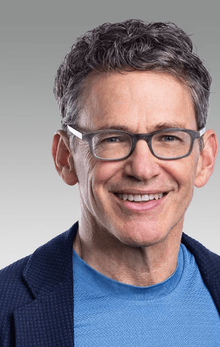
Bill Anderson
Member of the Board of Management