Henkel’s 2025 Report: Circularity, Emissions & Water
Manufacturing company Henkel aims to develop innovative and sustainable products, services and solutions, with around 47,200 employees worldwide.
It has released its 2025 Annual Report, featuring its Sustainability Statement which discusses its use of materials and impact on the environment.
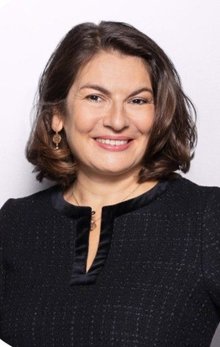
Sylvie Nicol, EVP Human Resources, Infrastructure and Sustainability at Henkel, says: “We’ve just released our 2025 Annual Report – and for the first time it combines both financial and sustainability KPIs in a single report, in line with the Corporate Sustainability Reporting Directive (CSRD).
“This integrated approach reflects a simple but important principle: sustainability is embedded across our entire organisation as a key driver for growth.
“It may often be seen as a long-term investment that competes with short-term financial targets. But when we view sustainability as an opportunity for market differentiation, it changes the game. And this is exactly our ambition at Henkel.
“In 2025, we once again made meaningful progress. Something we can be truly proud of.”
Taking climate action
Henkel has set a net zero target to reduce the absolute greenhouse gas emissions of Scopes 1, 2 and 3 by 90% by 2045, compared to a 2021 base year.
It has shorter-term targets include reducing absolute Scope 1 and 2 greenhouse gas emissions by 42% and reducing absolute Scope 3 greenhouse gas emissions by 30% by 2030 compared to 2021.
Henkel says that it assumes responsibility for reducing its impacts on climate change.
It plans to do this through substituting existing technologies with energy-efficient and carbon-friendly alternatives for its adhesives, sealants and coatings.
To meet its emission reduction targets, Henkel plans to increase its energy efficiency and transition to renewable energies, while avoiding investments in fossil fuels.
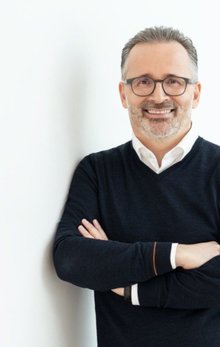
Carsten Knobel, Chair of the Management Board at Henkel, says: “Sustainable business practices are firmly anchored in our values and shape both our purpose and our growth agenda.
“Our sustainability strategy for the Henkel Group provides the framework for this commitment.
“Our net zero target is a key milestone and provides important momentum across the entire Company. A particular focus is on close collaboration with our suppliers, as a large share of emissions arises along the upstream and downstream value chain.”
Responsible water management
Water is a critical part of Henkel’s operations, as acknowledged by the company in its report.
It is used as part of its production process, as well as an ingredient in many of its products.
Henkel is aiming for a holistic approach to water stewardship, using collective action to manage water responsibly across the value chain.
In its operations, it aims to reduce water withdrawal and consumption, as well as reusing wastewater where possible.
It also focuses on optimising water requirements in its production and product design innovations that prevent water pollution in its downstream value chain.

Henkel’s resource use & economy
According to the report, Henkel is working on the transition to a circular economy, aligning its resource inflows and outflows with circular principles.
It has committed to increasing the share of renewable materials in its packaging and ingredients and it is prioritising sustainable packaging designs, minimising the use of packaging material and promoting reuse.
It aims to reduce the amount of raw materials through reformulation of products and redesigning packaging, without compromising the quality, performance or safety of its products.
Henkel says that it expects all of its suppliers to minimise their emissions by keeping materials within the economic cycle and designing for repair and reuse.
The company aims to cut waste from its own production facilities and its upstream and downstream value chain facilities.
This involves making production processes more efficient, through refining manufacturing techniques, minimising the use of raw materials and implementing practices to generate less waste overall.
Company portals
Executives
Carsten Knobel
Chief Executive Officer
Sylvie Nicol
Executive Vice President Human Resources, Infrastructure and Sustainability