How Ab InBev is making Beer Production More Sustainable
Anheuser-Busch InBev (Ab InBev) is a Belgian company that was formed in 2008, now home to one of the world’s largest breweries.
It has a portfolio of more than 500 beers, some of the best known being Budweiser, Corona and Stella Artois.
The company says it has a mission to reduce harmful consumption of alcohol and to advance a broader set of the United Nations Sustainable Development Goals with a focus on better access to clean water, sustainable agriculture and emergency response.
The company has released the second quarter of 2025 report, sharing its results of the year so far.
The highlights of the report
Revenue increased for the company by 3% alongside a decrease in beer volume by 1.9%.
The company reports that it has increased its investments in its brand, the expansion of its premium portfolio and innovation in balanced choices.
It says that growth was led by its non-alcohol beer portfolio which delivered a 33% revenue increase, nearly double compared to its 2024 results.
In the report, the company outlined its climate action responsibilities, reducing Scope 1 and 2 emissions per hectolitre of production by 47%.
In water stewardship, the company's water use efficiency ratio has improved to 2.40 hl per hl in 2025.
Michel Doukeris, CEO of AB InBev, says: “Beer is a passion point for consumers.
“The resilience of the beer category and the continued momentum of our megabrands delivered another quarter of profitable growth.
“EBITDA increased by 6.5% and the ongoing optimization of our business drove underlying EPS growth of 8.7%.
“While the operating environment remains dynamic, the consistent execution of our strategy by our teams and partners drove a solid first half of the year and reinforces our confidence in delivering on our outlook for 2025.”
What are Ab InBev's sustainability goals?
The company has ambitions to reach net zero by the end of 2040.
To reach this target it has set goals for 2025:
- 100% of its direct farmers will be skilled, connected and financially empowered
- 100% of its communities in high stressed water areas will have measurably improved water availability and quality
- 100% of its product will be made in packaging that's returnable and made from majority recycled content
- 100% of its purchased electricity will be renewable and there will be a 25% reduction in carbon emissions across its entire value chain#
Ingrid De Ryck, Chief Sustainability Officer at AB InBev, says: “At AB InBev we’ve had a solid first half of the year driven by the consistent execution of our strategy.
“The resilience of the beer category and the continued momentum of our megabrands delivered another quarter of profitable growth.”
What initiatives has Ab InBev got involved in to reach its goals?
The company has got involved in the 100+ Accelerator that invests in sustainability focused startups to pilot, validate and scale breakthrough solutions in water stewardship, farmer productivity, product upcycling, responsibly sourcing and green logistics.

It has also collaborated with Eclipse, a platform that supports supply chain partners in decarbonisation.
The company says it engages with suppliers, retailers and startups with innovative climate solutions.
It says by engaging with farmers in its value chain it will scale regenerative agricultural practice, enriching soil health and increasing carbon capture.
Ab InBev says it believes in implementing nature-based solutions to improve watershed health and help tackle climate change.
David Hauxwell, Chief Procurement Officer at AB InBev, says: “The imperative for companies to act on climate change is clear.
“We go further together than alone, and with Eclipse we can deepen innovative collaboration towards net zero emissions and demonstrate the beer sector’s leadership on this critical issue.
“We look forward to engaging with even more suppliers and partners to deliver long-term value and shared prosperity for the future.”
The company’s circular packaging approach is based on four principles:
- Reduce packaging and the need for virgin materials
- Increase the availability and use of recycled content
- Promote the recovery and reuse of packaging
- Rethink packaging and distribution models
Ab InBev collaborated with Global Innovations and Technology Centre in Belgium to assess and develop sustainable packaging technologies.
Alongside developing technologies within its operations, the business also supports partners, consumers and recyclers through education, investments and collaboration.
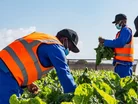
The company says it takes a farmer centric approach when supporting sustainable agriculture and its initiatives tackle environmental aspects of farming alongside socio-economic elements.

It uses a collaborative systems approach to improve soil health and farmer productivity, protect and restore water resources and biodiversity as well addressing the impact of climate change with the aim to create more resilient communities.
The company says it improved water stewardship in various ways across its value chain:
- Driving water efficiency, responsible discharge and effluent re-use within its operations
- Investing in shared water security and watershed health in partnerships
- Supporting communities through promoting water access and disaster relief efforts
- Engaging major suppliers and promoting water security through its brands
- Contributing to a broader wet landscape through innovation, policy engagement and thought leadership
The company has developed a water risk assessment tool using external data to review operational risk globally on a quarterly basis, alongside its seven step watershed process to address more specific challenges.
Michel says “The Boland Mountain Nature Reserve in Cape Town serves as a powerful example of what we can achieve in collaboration with our partners.
“By removing invasive vegetation, we help release more water into local catchments, benefiting our farmers and the surrounding communities.”