How AWS is Advancing Sustainability Across AI Cloud Growth
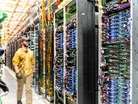
Amazon Web Services (AWS) holds responsibility for a growing share of digital infrastructure emissions as cloud computing expands.
The company's approach to energy, water and materials could define industry standards as artificial intelligence workloads increase power demand across data centres.
AWS argues that cloud infrastructure uses less energy than on-premises systems, but campaign groups and regulators are examining these claims more closely.
The debate has intensified as hyperscale operators expand capacity to meet demand from generative AI applications.

Efficiency claims under scrutiny
Amazon committed to net-zero carbon by 2040 through The Climate Pledge. AWS forms a central part of that target, both through direct operational cuts and by enabling customer reductions.
According to Amazon's own analysis, AWS infrastructure can be up to 4.1 times more energy efficient than on-premises facilities, reducing associated workload carbon footprints by as much as 99% when customers optimise their architectures. The company positions cloud migration as one of the fastest methods for chief information officers to cut Scope 2 emissions.
The efficiency advantage stems from several factors. AWS operates at scale, allowing better utilisation of hardware resources. Shared infrastructure means servers run at higher capacity than typical enterprise deployments. Automated workload management can shift computing tasks to times when renewable energy is more abundant on the grid.
AWS disclosed a global data centre power usage effectiveness of 1.15 in 2023, compared with an industry average of around 1.25. A lower PUE figure suggests less overhead energy is consumed beyond the IT load itself. The metric measures how much energy goes to cooling, lighting and other auxiliary systems versus actual computing.
Pressure is mounting as AI workloads, high-density compute and regulatory requirements converge on the sector. Training large language models requires significantly more power than traditional cloud applications, raising questions about whether efficiency gains can keep pace with absolute energy growth.
Renewable procurement and water use
Renewable energy purchases underpin the second pillar of AWS carbon strategy. Amazon reports that since 2023 it has matched 100% of the electricity consumed by its global operations, including AWS, with renewable energy purchases.
The company has maintained its position as the world's largest corporate buyer of renewables for several years. That scale of procurement could lower the carbon intensity of each kilowatt-hour used in AWS data centres, though campaign groups and analysts continue to challenge the quality and additionality of some projects and certificates.
Water consumption is another area of focus. AWS committed in November 2022 to be water positive by 2030, meaning it will return more water to communities than it uses in its direct operations.
By the end of 2024, AWS said it had reached 53% of the way towards this goal, up from 41% in 2023. The company published a global water use efficiency metric of 0.25 litres per kilowatt-hour and is expanding recycled-water cooling to more locations.
Reducing water use could cut the indirect emissions associated with treatment and movement while addressing local scrutiny of data centre water consumption. Some regions facing drought have begun restricting new data centre construction based on water availability.
- November 2022: AWS announces its goal to be water positive by 2030, committing to return more water to communities than it uses in direct operations and publishing a global water use efficiency metric of 0.25 L/kWh.
- 2023: Amazon reports that 100% of the electricity consumed by its global operations, including AWS, is matched with renewable energy, achieving a key milestone seven years ahead of the original 2030 target.
- 2024: Amazon’s 2024 Sustainability Report highlights how, across its AWS data centres, the company achieved a global power usage effectiveness (PUE) of 1.15, compared to the industry average of 1.25 in 2023.
- December 2024: AWS details use of lower‑carbon concrete and reduced steel in data centre builds, as well as partnerships to explore carbon‑removal technologies tailored to data centres.
- December 2025: AWS cuts the publishing time for customer carbon footprint data to 21 days or less after the end of each month, enabling near‑real‑time emissions management for cloud workloads.
- January 2026: AWS partners with Rio Tinto to secure lower-carbon copper for US data centres, linking Scope 3 emissions reduction, cloud analytics and domestic mining.
Embodied carbon in construction
Materials and construction methods are moving higher on the agenda for cloud operators.
AWS says its global data centre programme is using lower-carbon concrete and reducing steel volumes in new builds.
In December 2024, AWS detailed these changes and partnerships to explore carbon-removal technologies tailored to data centres.
The company is embedding lower-carbon specifications into standard design rather than treating them as one-off interventions.
Embodied carbon accounts for a significant portion of a data centre's lifetime emissions.
Construction materials, particularly concrete and steel, carry substantial carbon footprints before a facility becomes operational. By addressing these upstream emissions, AWS aims to reduce total lifecycle impact.
“Amazon’s Climate Pledge goal to reach net zero carbon by 2040 requires us to innovate across every part of our operations, including how we source the materials that power our infrastructure,” says Amazon’s Chief Sustainability Officer, Kara Hurst, discussing AWS’ recent partnership with Rio Tinto to source lower-carbon copper.
"As we continue to invest in next-generation carbon-free energy technology and expand our data centre operations, securing access to lower-carbon materials produced close to home strengthens both our supply chain resilience and our ability to decarbonise at scale," adds Kara.
Senior leaders at AWS have started to frame sustainability as both a responsibility and a competitive differentiator in cloud.
Company portals

Executives
Kara H. Hurst
Vice President, CSO, Worldwide Sustainability