How Does Airbus Strive For a Sustainable Aviation Industry?
The aviation industry provides opportunities for innovation and growth, bringing benefits to economies, tourism and trade.
According to the Air Transport Action Group, the sector contributed US$4.1tn to global GDP and supported 86.5 million jobs in 2023.
Airbus has been ranked 48th in Sustainability Magazine’s Top 250 World’s Most Sustainable Companies 2025.

Airbus’ sustainability principles
Airbus has set sustainability targets which have been validated by the Science Based Targets initiative (SBTi), as detailed in its 2025 Pioneering Sustainable Aviation report.
The company aims to reduce its Scope 1 and 2 absolute greenhouse gas emissions by 63% by 2030 and neutralise residual emissions.
It also aims to cut its Scope 3 greenhouse gas emissions intensity by 46% by 2035, compared to a 2015 baseline year.
One of its top priorities in its operations is safety, for its employees, products and services.
Its aircraft, helicopters, satellites and other technologies meet strict regulatory requirements and incorporate safety into its design, testing and production.
Airbus is helping the aerospace industry to reach its long-term goal of reaching net zero emissions by 2050.
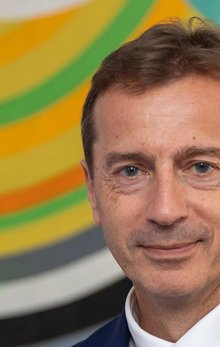
Guillaume Faury, CEO of Airbus, says: “This means expanding production of these new, fuel-efficient aircraft to help airlines accelerate the renewal of their fleets.
“With partners from across the world, Airbus is advocating for and investing in sustainable aviation fuels, which are critical to making progress in reducing emissions today.
“Our core principles of safety, quality, integrity, compliance and security will guide us in all we do.”
The energy transition in aviation
Airbus has developed a decarbonisation roadmap to help support the energy transition.
The company is aiming to increase the uptake of sustainable aviation fuel (SAF) across the industry.
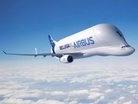
Its aircraft are already capable of flying on a blend of up to 50% SAF and conventional fuel and it plans to make all of its aircraft and helicopters able to fly with up to 100% SAF by 2030.
Using SAF provides a potential reduction in carbon dioxide equivalent emissions of up to 80% throughout its lifecycle when compared to kerosene, according to the International Civil Aviation Organisation.
Airbus is working closely with fuel producers, airlines, governments and researchers to accelerate SAF production and increase its availability.
Promoting a lifecycle approach
Airbus designs its products with circularity in mind, building them to last for more than 20 years.
The company aims to reduce environmental impacts across its operations and supply chains.
It has been working on building resilience into its supply chain, starting with sourcing its materials up until its products’ end of life.
Airbus aims to minimise waste and raw material use to extend the lifespan of its services and products and encourages its customers and partners to do the same.
Its target is to reduce its waste collection by 20% and have 0% landfilling and incineration without energy recovery by 2030, compared to 2015 levels.
Julie Kitcher, Chief Sustainability Officer at Airbus, says: “We want to do business in a way that benefits society as a whole.
“We stand for transparency and integrity, and expect our partners and suppliers to do the same.
“Thus Airbus is helping to maintain high standards throughout the industry value chain.”
Company portals

Executives
Guillaume Faury
Chief Executive Officer
Julie Kitcher
Chief Sustainability Officer and Communications