How Fortescue Zero is Transforming the Mining Industry
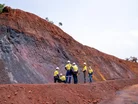
The World Economic Forum (WEF) says that critical mineral demand is expected to increase four to six times by 2040.
However, the mining and metals sector contributes to drivers of biodiversity loss, such as land-use change and ecosystem disturbance, pollution, water abstraction and greenhouse gas emissions across its entire value chain, according to WEF.
Fortescue Zero is a green technology and engineering mining company, with a focus on developing and deploying Real Zero solutions in heavy industry, mobility and motor sports.
The company says it is working to accelerate commercial decarbonisation in the mining industry.
The history of Fortescue zero
The company was founded in 2003, based in Western Australia the company set out to become a global green technology, energy and metals company.
It was forged under its flagship mine site, Cloudbreak, which was followed by the second mine Christmas Creek a year later.
The two sites make the company's Chichester Hub that has an annual production capacity of 100 million tonnes.
Later, the company opened two more mines, Solomon in 2012 and Eliwanna in 2020, with another production capacity of around 100 million tonnes a year.
The two hubs are connected by 760 kilometres of rail.
In 2020, the company also created the Integrated Operation Centre which brings together the supply chain.
The company says it delivers enhanced safety, productivity, efficiency and commercial benefits and aims to use it to underpin the use of future technology like AI and robotics.
The year also saw the creation of Fortescue Future Industries which focuses on developing green electrons, green hydrogen and green technology at scale to replace fossil fuels.
Fortescue Zero’s sustainable goals
By 2030, the company aims to have its Australian iron ore operations running on green energy and achieving zero Scope 1 and 2 emissions, using no fossil fuels at all across its operations.
By 2040, the company hopes to reach net zero across its whole value chain.
Fortescue Zero says although sustainability is deeply integrated into the company it is still focusing on improving its sustainability.
It says that it implements various initiatives across the company to take a precautionary approach to environmental management, continuing to inversion initiatives and technologies that minimise its impact on the environment.
Dino Otranto, CEO of Fortescue Metals, says: “There are new and better ways of operating, through lower cost, more efficient technologies.
“Fortescue is seizing these opportunities rather than foisting the problem on the next generation.
“The fossil fuel era is winding down and Fortescue intends to be at the forefront of what comes next.”
Fortescue zero sustainable solutions
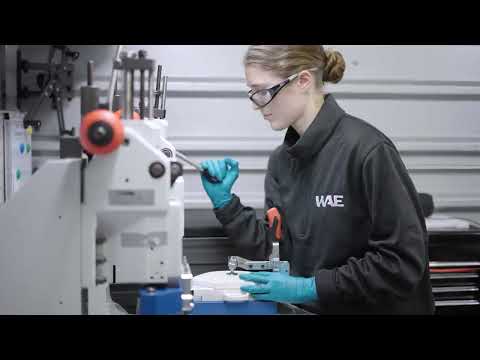
In 2022, the company acquired Williams Advanced Engineering and announced the world's first zero emissions Infinity Train.
The train runs on regenerative batteries, using gravitational energy to recharge its battery electric systems.
The company also has developed heavy industry power systems powered by Elysia and cloud-based batteries.
Elysia is built to extend battery life, enhance safety and unlock range, power and faster charging.
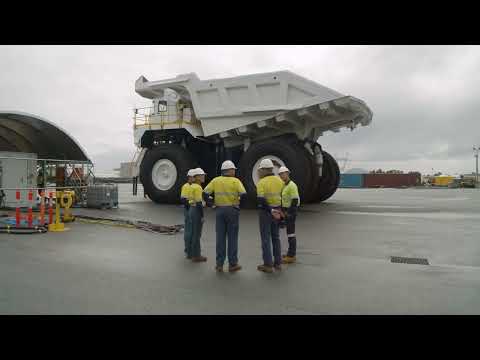
The power systems built are specifically designed for the Mining, Construction, Rail and Automotive markets providing haul trucks, dozers and grader power systems that are all electrically charged rather than using fossil based fuels.
Along with creating machinery, the company also has engineering based in Formula E.
Fortescue Zero says it creates several solutions for tier one motorsports partners such as power systems, fast charging systems as well as providing consultation services to discuss new technologies to work towards decarbonisation.
In 2024, Fortescue announced a partnership with OCP Group to make a green energy hub in Morocco that aims to supply green hydrogen, ammonia and fertilises to Morocco, Europe and even international markets.
The company is heavily focused on charging systems across its operations, supporting a wide range of vehicle electrification
It says that its systems can charge a 250 tonne haul truck in 30 minutes and after one sports car in 30 seconds.
Ellie Coates, CEO at Fortescue Zero, says: “These innovative chargers are designed to be a safe, rugged, high power and scalable fast charging solution for multiple different vehicle applications.
“Leveraging our world-class capability in battery and charging solutions from motorsport, the fast chargers have been developed for the challenging conditions of the Pilbara.
“Equipped with robotic connection options, they will be able to power Fortescue’s future 240-tonne Liebherr T 264 battery electric trucks in just 30 minutes.”