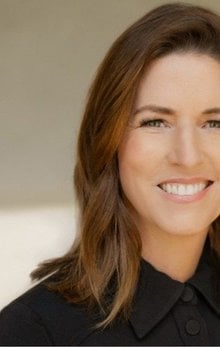
How is Kara Hurst Leading Amazon to Net Zero by 2040?

Kara Hurst, Chief Sustainability Officer at Amazon, has been ranked in third position in Sustainability Magazine’s Top 250 Sustainability Leaders 2026.
This recognises Kara’s work to promote sustainability across Amazon’s operations, particularly in terms of water stewardship, energy efficiency and AI.

Kara Hurst’s career
Kara began her career working in public service, as an Associate for Senator Daniel Patrick Moynihan and a Policy Analyst for Mayor Willie Brown of San Francisco.
She then moved into the private sector, starting her work in corporate responsibility and sustainability.
She worked at BSR (Business for Social Responsibility) for more than 11 years, working her way up to Vice President.
At the company, Kara developed skills in strategy, budget and staffing, working with global multilateral partners, CEOs and elected officials.
Between 2012 and 2014, Kara was CEO of The Sustainability Consortium, which is an organisation of companies, academics and civil society organisations working on product sustainability.
Kara managed technical and scientific research staff across the US, Europe and China during her tenure.
In September 2014, she took on her current role as Vice President, CSO, Worldwide Sustainability at Amazon.
She uses the scale of the company to lead the implementation of environmental sustainability and social responsibility across Amazon’s own operations and its value chain.
Kara writes on LinkedIn: “As Chief Sustainability Officer for Amazon, I lead the Worldwide Sustainability team, overseeing the company’s transition to more sustainable operations, transport, renewable energy, sustainable products, packaging and shopping, and our commitment to The Climate Pledge, which we co-founded in 2019 and set our intention to be net zero carbon by 2040.”
How Amazon is cutting emissions
As CSO, Kara leads Amazon’s sustainability initiatives, including its journey to decarbonise its supply chain.
By the end of 2024, it had reduced the carbon emissions per shipped unit by roughly one-third since 2019.
This included offering shipping options that improve routing, by combining products into one delivery, avoiding the use of more than 494 million boxes.
Amazon is also working on expanding its fleet of EVs worldwide, achieving 1.5 billion packages delivered by EVs in 2024.
Kara has worked to regionalise the company’s logistics in order to reduce transport emissions, as well as introducing sustainable packaging solutions to minimise waste.
In the company’s 2024 Sustainability Report, Kara says: “When we ask why sustainability matters, the answer is clear: Sustainability is not separate from our customer obsession – it’s an extension of it.
“Solutions that benefit the environment can create superior experiences for our customers and also become economic drivers that help strengthen communities and protect the planet.
“No matter what we’re faced with in the future, we’ll remain steadfast in our commitment to sustainability and will continue to invest, innovate and obsess over our progress each year, with the same intensity and focus that has defined Amazon from Day One.”
All sustainability, net zero and sustainable supply chain leaders should attend:
- Sustainability LIVE: The Net Zero Summit - QEII Centre, London, March 4-5
- Sustainability LIVE: The US Summit - Navy Pier, Chicago, April 21-22
Co-located with Procurement & Supply Chain LIVE, these events brings together CSOs, ESG leaders and senior decision-makers at a moment when sustainability, supply chains and commercial performance are increasingly interconnected.
Tickets can be booked online today for The Net Zero Summit and The US Summit. Group discounts available.
Kara’s legacy at Amazon
Most recently, Kara helped launch Get Blue alongside Water.org at the WEF annual meeting in Davos.
Get Blue – a partnership between Water.org, Amazon, Gap, Ecolab and Starbucks – aims to solve the global water crisis by bringing water solutions to 200 million people by 2030.
The initiative is designed to accelerate access to safe water and sanitation through aligning business leadership and funding behind Water.org’s solutions.
Each of the companies involved will work to provide products, content and experiences to help fund water access, taking advantage of their global network and reach.
Kara says: “The water crisis requires sustained, meaningful action and Get Blue is an example of what the private sector can do to help raise awareness and work together to drive solutions and impact.
“This approach builds on Amazon’s aim to be a responsible water steward in communities – and water-stressed regions – where it operates, as it works to reduce water use across its operations through investment, innovation and implementation.”
Company portals

Executives
Kara H. Hurst
Vice President, CSO, Worldwide Sustainability