How is The UK Ramping up EV Charging with £63m in Funding?
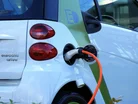
Access to reliable and affordable EV charging has long been one of the biggest barriers to cleaner transport across the UK.
Now, a £63m (US$84.8m) investment aims to shift that, delivering infrastructure improvements that not only benefit households and businesses but also help reduce emissions in line with net zero targets.
This new funding, announced on 13 July 2025, is part of the government’s broader Plan for Change, intended to spark economic growth while building a lower-carbon future.
The measures are structured to support individuals, industry and public services in making the switch to zero-emission transport, while promoting sustainability in everyday operations.

Home charging for more households
The core of the package is a £25m (US$33.7m) fund targeted at local authorities.
This scheme is intended to open up access to cheaper EV home charging for people without off-street parking, particularly those in terraced homes or flats.
Using what’s known as cross-pavement technology, equipment that enables EV charging cables to run safely beneath pavements from domestic plug sockets to parked cars, the scheme helps these drivers tap into home electricity rates, which can be as low as £0.02 (US$0.03) per mile.
This shift is expected to save households up to £1,500 (US$2,020) a year compared to driving petrol or diesel vehicles.
By helping more people use existing home energy infrastructure, the scheme also reduces pressure on the public charging network and enables more equitable access to EV cost savings.
For those currently priced out of home charging, this move opens the door to practical, lower-emission transport.
"The cost of deploying charging infrastructure remains one of the biggest barriers, particularly in rural and low-density areas where commercial returns can be harder to justify," says Jon Evans, Head of UK and IE Market at Monta.
"While the recent funding is a helpful boost, a truly scalable network will require long-term investment from both public and private sectors, supported by clearer planning and regulatory frameworks.
"Accelerating planning approvals, supporting local authorities and enabling private sector involvement will be essential to unlocking further investment and ensuring consistent rollout.”
Public services and businesses go electric
Public sector organisations are also a major focus, with £8m (US$10.8m) allocated to electrify more than 200 NHS sites across 62 NHS Trusts.
This upgrade supports the Health Service’s transition towards more sustainable operations, expected to deliver large maintenance and fuel savings.
Chris Gormley, Chief Sustainability Officer for the NHS, explains: "The NHS has already implemented hundreds of projects that reduce emissions and drive significant cost savings, all while improving patient care."
"This new £8m (US$10.8m) investment, across 62 NHS Trusts and around 224 sites, supports the renewed commitment in the government’s 10 Year Health Plan to deliver a more sustainable NHS while also helping hospitals to save millions on fuel and maintenance costs and reducing air pollution."
Health Minister Karin Smyth adds: "This is a win-win: cheaper travel for the NHS and cleaner air for our communities. As part of our Plan for Change, we’re investing in green energy to build an NHS fit for the future, cutting pollution and saving millions in fuel costs."
Businesses will also benefit from a new grant scheme designed to install charging infrastructure at depots.
Targeted at freight, logistics and coach operators, sectors employing more than 1.2 million people, the scheme aims to lower the environmental footprint of UK commercial transport while preserving industrial competitiveness.
“The UK Government’s £63 million investment in EV charging infrastructure is a promising commitment to achieving its EV goals and closing the charging gap," says Antoine Picron, Director of Europe Public Policy at ChargePoint.
"By targeting households without driveways, as well as NHS trusts and fleet depots, this funding will help address key barriers and bring clean transport closer to everyone.
"As demand for EVs surges, charging infrastructure must keep pace.
"With the 2030 Zero Emission Vehicle (ZEV) mandate fast approaching, this announcement is a step in the right direction, but much bolder action is needed and quickly."
Boosting visibility and public confidence
Infrastructure improvements also include a new push for official EV road signage on the UK’s strategic road network.
This move, long requested by industry bodies, is designed to help EV drivers better locate charging hubs, supporting longer trips and bolstering public confidence in the charging network.
Delvin Lane, CEO of InstaVolt, says: "We are pleased that the government has taken the crucial step of delivering official EV charging signage on the strategic road network."
"This marks a major milestone for the EV industry and drivers across the UK.
"For years, we have emphasized that the UK’s public EV infrastructure, so critical to mass adoption, is already largely in place, and now this signage will finally showcase it to drivers in a visible, accessible way."
Ian Johnston, CEO of Osprey, agrees: "Signage impacts all the UK’s drivers because consumers need to see it to believe it."
"This is a welcome first step and we look forward to continuing to work closely with ministers and officials to achieve clear signage for the hundreds of high-quality EV charging hubs being opened across the nation."
Vicky Read, CEO of ChargeUK, highlights: "With 82,000 public charge points already installed across the UK, this positive action on strategic road signage will help more drivers see the extensive charging network that’s rapidly being built across the country."
"Our members are investing £6bn (US$8.09bn) to ensure the deployment of charging infrastructure stays ahead of demand."
Edmund King, President of the AA, adds: "There are more public chargers than people realise, but they are often hidden in plain sight. It is great to see more support for those without off-street parking so that they can also benefit from the EV revolution."
This £63m investment builds on more than £400m (US$539m) already spent to grow the UK’s EV charging network.
A further 100,000 new public chargers are expected by 2030, supported by £6bn (US$8.09bn) in private investment.
Transport Secretary Heidi Alexander outlines the broader intent: "We are making it easier and cheaper to own an electric vehicle.
"We know access to charging is a barrier for people thinking of making the switch, so we are tackling that head on so that everyone, whether or not they have a driveway, can access the benefits of going electric."
"We’re not just boosting charging infrastructure, we’re building a fairer, cleaner future where every family can benefit from cheaper, greener transport, whilst creating thousands of good jobs across the country."