How L'Oréal Groupe Embeds Sustainability in R&D

The lotions and potions of the global beauty market are worth hundreds of billions of dollars. From skincare and makeup to haircare and fragrance, these items are in bathrooms and washbags around the world.
Beauty products, like all material goods, can have environmental consequences. Ingredients like palm oil, siloxanes and microplastics can have a sustainability impact alongside all the steps it takes to get a product from formulation to the bathroom cabinet.
L’Oréal set its first industrial environment targets 20 years ago. For Ana Kljuic, Vice President Research & Innovation (R&I) for the Future & Green Sciences at L’Oréal, sustainable beauty is a mission measured in both hard data and long-term transformation.
“I’m in charge of sustainable development and research and innovation,” Ana explains. “My team leads L’Oréal for the Future, our transformation programme and our Green Sciences programme, which is how research responds to our 2030 sustainability objectives.”
L’Oréal’s R&I network spans 4,000 researchers. Ana’s role is to mobilise all of them towards sustainability targets while planning beyond 2030. This means assessing the environmental impact of every ingredient, exploring cutting-edge technologies like AI and identifying new ways science can reshape the beauty industry.
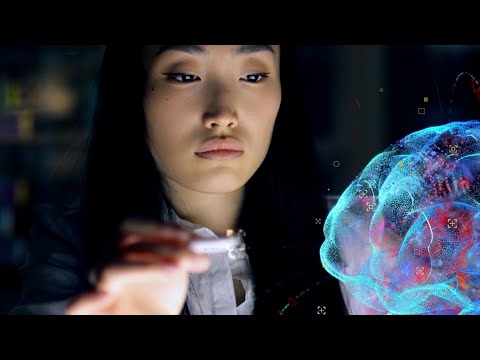
What is green science?
Green science, Ana says, is not a single discipline but a framework.
“It’s a set of scientific disciplines that deal with how we source and transform our ingredients,” she explains.
This framework has four pillars. First is sustainable agriculture, ensuring raw plant materials are grown responsibly. Second is green chemistry and green extraction, which replace high-energy or resource-intensive processes with lower-impact methods. Third is biotechnology, covering techniques like fermentation that use living systems to produce or transform ingredients. Finally, there is innovation in ingredient transformation, creating new materials without depleting natural resources.
- From discovering new ingredients to safety testing, AI can help to accelerate R&D dramatically
- Through analysing vast datasets, AI can identify and predict the biological activity of new ingredients and even help to discover them through reducing experimental workloads
- Simulations using AI can explore the interactions of chemicals in formulations to help predict stability while optimising ingredient combinations
- AI-driven models – of skin, for example – can simulate biochemical interactions and physiological responses, increasing the accuracy of preclinical testing and reducing reliance on animal testing and physical trials
- By analysing environmental impact data, AI can help to support sustainable sourcing of ingredients and optimise production processes to reduce waste and emissions
- Through reducing the expense and duration of R&D, AI can help to speed up new product launches and respond faster to market trends and consumer demands
In practical terms, green science covers the earliest stages of L’Oréal’s value chain: the upstream processes that happen long before a product reaches a shop shelf.
L’Oréal’s sustainability goals
Before change can happen, impact must be measured. In 2016, L’Oréal developed the Sustainable Product Optimisation Tool (SPOT) with 11 independent experts, including the LCA Institute in Montreal. Based on lifecycle analysis, SPOT calculates the environmental impact of products from raw material sourcing to end-of-life.
With clear baselines in place, L’Oréal has committed to ensuring at least 75% of its ingredients come from renewable natural sources or recycled materials by 2030. Today, Ana says that 66% of the company’s ingredients already meet this criterion and 82% are biodegradable.
Ana reveals the biggest challenge is scaling sustainable technologies at a viable cost.
“It’s a race against the clock with climate change,” she warns. “We see incredible innovations in agriculture, sourcing and packaging. But bringing them to scale affordably, in a short time, is the real challenge.”
Partnerships and collaborations
“You need partnerships for methodology, for innovation, for scale-up — even with your competition,” Ana says.
- AI has potential across a range of aspects of the beauty industry and L'Oréal is collaborating with NVIDIA to unlock these
- Through the collaboration, L'Oréal and its partner ecosystem are set to leverage the NVIDIA AI Enterprise platform for the rapid development and deployment of AI such as scaling 3D digital rendering of products
- CREAITECH, for example, is L’Oréal Groupe’s generative AI content platform that can develop and use 3D digital rendering of products for faster, more creative deployment of marketing and advertising campaigns
- “By leveraging NVIDIA AI Enterprise, L’Oréal is bringing rapid innovation, scalability, personalised marketing and advertising that improve consumer engagement and conversion,” says Azita Martin, Vice President and General Manager Retail and CPG at NVIDIA
“The interaction between nature, science and technology is giving us a multitude of new options.”
French-American startup Interstellar Lab creates AI-controlled, climate-resistant biopods for plant production. Another is a partnership with Cosmo International, a French family business that extracts perfume ingredients using only air to preserve delicate volatile molecules.
Sometimes competitors join forces. More than 60 cosmetics players, including L’Oréal, have co-developed EcoBeautyScore, a standardised environmental footprint label for products, designed to help consumers compare sustainability impacts across brands.
“This will give all cosmetic players a common language for communicating with consumers,” Ana says. “It will help them navigate the confusing world of sustainability.”
Rohini Behl, Head of Sustainability for SAPMENA at L'Oréal, adds: “It takes a village to make real, lasting change. We need everyone in the ecosystem – governments, businesses, suppliers, retailers, consumers and communities – working together.”
Ezgi Barcenas, L’Oréal’s Chief Corporate Responsibility Officer, writes on LinkedIn: “There is still much to do to accelerate our transformation, build greater resilience and to create shared value – more partnerships to form and newer solutions to pilot, scale and help finance.”
“Transformation happens through actions – one product, one choice, one moment at a time.”
- L'Oréal is using Google’s Imagen 3 and Veo 3 within its CREAITECH lab to support marketing production, enabling the generation of visuals and animated sequences using prompts
- Visuals are a core part of the beauty industry, not just for those using products but also for the products themselves. This could make incorporating generative AI a high-stakes choice
- In 2021, L'Oréal released its Responsible Framework for Trustworthy AI with seven principles overseen and verified by international governance bodies
- The company also says it carefully considers whether AI use is beneficial to the environment with a structured workflow to assess and approve new AI initiatives. It also carefully selects technologies to ensure they are the best fit
Sustainable beauty in the future
Bringing new developments to consumers at scale is not simple. This process, Ana says, takes time.
“You can’t grow plants overnight,” she explains. “It takes years to bring some innovations to market.”
However, she remains optimistic.
“There is still much to do to accelerate our transformation, build greater resilience and to create shared value.”
“We’re living at an incredibly exciting moment,” Ana says. “The interaction between nature, science, and technology is giving us a multitude of new options. The more we embrace it together, the faster we can move for our consumers, our planet and our business.”
Rohini concludes: “Transformation happens through actions – one product, one choice, one moment at a time. Making deliberate decisions every day can set in motion forces greater than themselves.”