
How Many Years are Left Until Global Oil Runs Out?
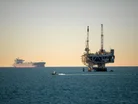
Disruption in the Strait of Hormuz, a passage between the Persian Gulf and the Gulf of Oman, is sparking drastic shifts in the global oil market.
Since the US and Israel began strikes against the Iranian Government on 28 February, disruption in shipping and global trade has caused a surge in oil and gas prices.
This has significant implications for sustainability, prompting renewed conversations around the adoption of renewable and sustainable energy alternatives.

Shipping disruptions in the Middle East
The Strait of Hormuz, between the UAE and Iran, sees around 15 million barrels a day of crude, condensate, jet fuel and diesel flow through it.
Experts say this equates to around 20% of global oil output.
Rafael Grossi, Director General of the International Atomic Energy Agency, says that the situation is “very concerning” and warns that strikes on Iranian nuclear facilities could lead to evacuations in areas of the country.
“We cannot rule out a possible radiological release with serious consequences, including the necessity to evacuate areas as large or larger than major cities.
“We therefore urge utmost restraint in all military operations.”
This disruption is already having impacts on energy-dependent sectors.
Agriculture is set to be affected as nitrogen fertiliser exports have been halted, threatening to disrupt planting schedules across South Asia.
Qatar’s suspension of LNG exports could cause storage overflow, potentially forcing production to be cut and threatening power generation security.
What could happen to oil supply?
Global oil prices surged by up to 13% on Monday morning following the coordinated military strikes against Iran.
Analysts from Wood Mackenzie warn that prices could rise to above US$100 per barrel if the issue is not resolved.
It drew parallels to the 1970s oil embargo, when prices jumped by 300%.
Asia currently sources 60% of its oil from Middle Eastern producers, with Japan’s Chief Cabinet Secretary Minoru Kihara confirming that some crude tankers are waiting in the Persian Gulf until the journey is safe.
India is reportedly considering turning to Russian oil if the crisis extends beyond 10 to 15 days.
Some experts say that the world is “chained” to fossil fuels, and should instead look at renewable alternatives, urging governments to accelerate the transition away from oil and gas.
The shift to renewable energy
While the immediate focus has been on fossil fuel supplies, the conflict could have significant implications for renewable energy deployment.
Technology shipments, including microchip and EV battery components, are stranded in the region, making power storage supply pressures worse.
With Gulf airspace partially closed, global air cargo capacity has dropped by 18% in a week, disrupting supplies of urgent spare parts and energy technology.
Construction materials for energy infrastructure projects have also been delayed, with fire damage and port closures holding up deliveries for projects like NEOM’s The Line, which has positioned itself as a flagship sustainable development.
“Political leaders in all countries must wake up and reclaim the moral compass,” says Mads Christensen, Executive Director of Greenpeace International.
“This means pursuing peaceful, diplomatic solutions and securing access to affordable, sustainable energy to replace the volatility of the fossil fuel-driven world order.”
The crisis presents a complex challenge for policymakers balancing immediate energy security concerns with longer-term sustainability commitments.
Soaring fossil fuel prices could accelerate investment in renewable alternatives as countries seek to reduce their exposure to Middle Eastern supply risks.
Company portals


Executives

Rafael Grossi
Director General