How Mars Promotes Regenerative Agriculture & Healthy Eating
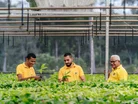
In 2017, Mars launched its Sustainable in a Generation Plan, which outlines its focus on shaping a sustainable future with a healthier planet, thriving people and pets and a more inclusive society.
The launch of the latest report aligns with Mars achieving 100% renewable electricity across all its US operations – a major milestone for the company.

What is Mars’s sustainability plan?
Mars’s portfolio includes some of the world's most popular snacking and pet food brands, such as M&M’s, Snickers, Whiskas and Pedigree.
In December 2025, the company completed its acquisition of Kellanova, adding brands including Pringles, Pop-Tarts and Kellogg’s international cereals to its portfolio.
Mars aims to reduce its total greenhouse gas emissions across its value chain by 50% by 2030 and to achieve net zero by 2050, compared to a 2015 baseline.
In 2025, it achieved a 16.9% reduction in greenhouse gas emissions across its value chain and a 42.6% reduction in Scope 1 and 2 emissions.
By 2025, Mars has sourced 78.4% of its electricity from renewable sources, towards its target of sourcing 100% of its electricity and thermal energy from renewable sources by 2040.
Poul Weihrauch, CEO of Mars, says: “The world our business operates in, and depends on, continues to change. Conflict, economic shocks and extreme weather are reshaping how we operate.
“What was once exceptional is becoming routine, from supply chain disruption to changing growing seasons. That is exactly why sustainability is central to how we grow and thrive. Not only because it’s the right thing to do for people and the planet, but because it’s the only way to build resilience and economic certainty for our business and the thousands of people across our full value chain.
“What gives me confidence is the commitment of our Associates, the strength of our brands and our continued ability to adapt, invest and innovate for the long term.
“I look forward to continuing to bring joy, nutrition and support to people and pets all over the world. We will continue our efforts to generate good jobs and support our Associates and communities, while continuing to make progress towards a more resilient and more sustainable future for all.”
Sustainable farming initiatives
In 2025, Mars supported approximately 77 climate-smart agriculture projects across 26 countries and 12 key crops.
It has worked with farmers, researchers and partners across its value chain to help strengthen crop resilience and support more sustainable food production.
In 2025, Mars collaborated with PepsiCo and ADM to launch a regenerative agriculture programme in Poland that supports 24 farmers in adopting sustainable practices.
In this programme, Mars has supported regenerative wheat production across 3,450 hectares for its brands including Whiskas and Pedigree.
Alastair Child, Chief Sustainability Officer at Mars, said on LinkedIn: “Business leaders today are navigating supply chain disruptions, rising costs, geopolitical uncertainty and growing pressure to deliver results in the near term. In that environment, sustainability cannot be viewed as a separate agenda.
“The question is no longer whether action on climate and sustainability is the right thing to do. The question is whether we can demonstrate that it creates long-term economic value, strengthens resilience and helps businesses compete and grow.
“At Mars, we are seeing evidence that it can. But we’re also learning that progress is rarely linear, transparency matters and no company can transform systems alone.”
Sustainability leaders won’t want to miss Sustainability LIVE: The Leadership Summit at London Climate Action Week, taking place at Code Node on 25 June 2026.
Register now for this exclusive invite-only event.
Supporting healthy communities
Alongside its environmental and planet concerns, Mars focuses its sustainability efforts on nourishing wellbeing.
It works on expanding access to nutritious food through partnerships, donations and local initiatives, building healthier, more resilient communities.
Mars expanded its portfolio of healthier meal choices, including Ben’s Original products with high protein and high fibre with no artificial ingredients.
Mars Food & Nutrition Australia donated 4.47 million meals in 2025 through its collaborative supply programme with Foodbank Australia.
Dr Abigail Stevenson, Chief Science Officer at Mars, says: “Nourishing Wellbeing means strengthening our portfolio through science-led, human- and pet-centric decisions, while supporting access to food through our partnerships and community initiatives.
“We are transparent about our progress, clear about the challenges and focused on solutions that create long-term value.
“Real impact comes from collaboration across our value chain to drive resilience, innovation and trust.”
Company portals

Executives
Abigail Stevenson
Chief Science Officer

Alastair Child
Chief Sustainability Officer

Poul Weihrauch
CEO