How Microsoft Cuts Water Use While Scaling Data Centres
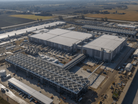
The rising demand for cloud and AI services has made data centres increasingly vital. As infrastructure expands, communities want to understand its impact on local water resources.
Microsoft has prioritised water stewardship since its first data centre builds in the early 2000s, anchoring both its Community-First AI Infrastructure initiative and its commitment to become water positive by 2030.
This pledge means the company will replenish more water than it withdraws across its global operations.
In FY25, the company successfully replenished more water than it withdrew globally. This proves digital growth can expand alongside sustainable water management.
To track efficiency, Microsoft measures its water use effectiveness (WUE) in litres per kilowatt-hour (L/kWh). Decades of innovation have lowered its average WUE from 2.3L/kWh in the early 2000s to 0.27L/kWh in 2025, an improvement of nearly 90%.
Microsoft aims for a 40% reduction in water-use intensity across its owned fleet by 2030. Having achieved a 25% reduction by 2025, the firm is well past the halfway mark.
Innovation in cooling and operational design
Efficiency gains are driven primarily by evolving cooling designs. Early facilities used high-efficiency economising chillers at elevated temperatures. By 2008, Microsoft shifted towards direct air cooling with evaporative assist across its fleet.
This approach uses outside air and introduces water only when temperatures exceed 29.4°C (85°F), cutting water consumption by up to 90% compared to traditional systems.
Climatic variations dictate usage: facilities in Northern Europe require no water year-round, whilst those in Dublin and Amsterdam use water less than 5% of the time.
In temperate areas like Virginia, water is needed for about 10% of the year, rising to 40% in hot climates like Phoenix. Currently, approximately 90% of Microsoft’s 2025 owned fleet utilises these low- or zero-water systems.
To support expanding AI workloads, Microsoft introduced a zero-water data centre design in 2024. This features a closed-loop, direct-to-chip liquid cooling solution that recirculates water for precise temperature control without evaporation.
Alongside new designs, the company continuously modernises existing facilities. By fine-tuning temperature setpoints, using real-time weather analytics and conducting regular water audits, the company prevents overcooling.
In Phoenix, these operational adjustments secured a 23% year-over-year improvement in WUE for FY25 alone, an approach now being deployed globally.
Melanie Nakagawa, Chief Sustainability Officer at Microsoft, writes on LinkedIn: “Over the past two decades, we’ve reduced water use intensity by nearly 90%.
“That progress starts with designing data centres that require less water from the outset and extends to how we run them day to day – using data and controls to improve efficiency and reduce unnecessary use.
“It also includes how we source water, with a growing focus on recycled, reused and non‑potable water to reduce reliance on freshwater.”
Integrating alternative water sources
Beyond reducing consumption, Microsoft focuses heavily on substituting fresh water with recycled, reused and non-potable alternatives in highly water-stressed areas. This strategy minimises the burden on municipal drinking supplies.
In three key operational hubs – Quincy in Washington, Singapore and San Antonio in Texas – the company utilises 74%, 99% and 79% recycled or non-potable water, respectively.
Rainwater harvesting is another expanding alternative source. Systems are active at select facilities in the Netherlands, Sweden and Ireland, with further installations planned in Canada, the United Kingdom, Finland, Italy, South Africa and Austria.
In Quebec, new data centres are projected to capture up to 1.5 million litres of rainwater each year to offset municipal withdrawals. When necessary, facilities deploy on-site water treatment systems. These purification technologies allow water to be cycled multiple times through cooling systems, reducing overall reliance on utilities.
Melanie writes: “A key driver is our move to low- and zero-water cooling. Many of our data centres now rely on outside air or closed-loop technologies that significantly reduce water use, and our newest designs for AI go further – using zero water during operations.
“This is an important step in decoupling data centre growth from water consumption as demand continues to rise.
“Looking ahead, we’ll continue advancing innovation across design, operations and water stewardship, and expanding our partnerships for replenishment as we work toward our goal of being water positive by 2030.”
Community collaboration
Microsoft also invests directly in the health of local watersheds. Guided by its Data Centre Community Pledge, the company collaborates with local utilities and fully funds required system upgrades so communities do not bear the cost.
For example, Microsoft has committed over US$25m to water and sewer upgrades near its Leesburg facility in Virginia. Since 2020, the company has directed more than US$500m toward more than 75 water and wastewater infrastructure initiatives worldwide.
Replenishment efforts also involve innovative community partnerships that utilise advanced technology and ecological restoration.
In the Phoenix area of Arizona and parts of Nevada, Microsoft partners with local utilities and FIDO Tech to deploy AI-powered leak-detection systems that identify hidden faults in ageing piping networks, conserving water.
In the American Midwest, the company works with The Nature Conservancy to restore historic oxbow wetlands. These crescent-shaped bodies of water serve as natural reservoirs that recharge groundwater aquifers, alleviate flood risks and support agricultural stability.
Moving forward, Microsoft intends to explore further innovations, such as zonal cooling architectures, to continuously align hardware requirements with sustainable practices, ensuring that digital advancement supports community well-being.
Company portals

Executives
Melanie Nakagawa
Chief Sustainability Officer