How Patagonia is Doing Sustainability Differently

The apparel industry accounts for roughly 2% of annual global greenhouse gas emissions, according to the World Resources Institute.
To combat this, companies like Patagonia are working to reduce their carbon footprint, through supply chain management and energy efficiency.
The company operates in 45 countries across six continents, with 106 owned stores globally.
Patagonia has released its first ever sustainability progress report, showing its progress towards decarbonisation.

Patagonia’s sustainability goals
Patagonia’s target is to reach net zero emissions by 2040.
Instead of reaching this by purchasing offsets, it aims to clean up its supply chain and “stop polluting in the first place”.
It has also set a goal for its global owned and operated offices and facilities to be powered by 100% renewable electricity.
By the end of fiscal year 2025, it has reached 98% renewable electricity use and is working to address the remaining 2%.
The company is unique in its sustainability reporting, saying “nothing we do is sustainable”.
It claims that no company truly gives back as much or more than it takes from the environment.
Instead, Patagonia aims to be transparent and accountable for its impact by recognising the damage it causes and what it can do to reduce and repair the damage.
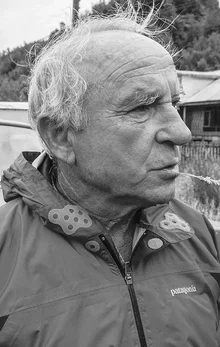
Yvon Chouinard, Founder and Ex-Owner of Patagonia, says: “Patagonia is not perfect by any means.
“We do not have all the answers, but the fear of getting things wrong in the process cannot stop us from trying to get things right in the end.
“We have work ahead of us to reach the full potential of our business structure, prove this experiment works and explain why it matters to our employees and community.”
Sourcing sustainable materials
In its report, Patagonia highlights its focus on creating quality products.
It aims to ensure that its clothing and accessories are responsibly made, high quality and durable, with a particular focus on being multifunctional and repairable.
This results in reducing waste and taking advantage of valuable natural resources.
In FY2025, more than 93% of its polyester and 89% of its nylon are recycled, reducing its use of petroleum and promoting waste recycling streams.
Patagonia’s report states that it is focusing on sourcing recycled synthetic materials that are just as durable as non-recycled synthetics, in order to reduce its reliance on fossil fuels.
Its goal is to completely eliminate non-recycled or virgin synthetic fibres made from petroleum by the end of 2025.
Ryan Gellert, CEO at Patagonia, says: “The last thing we wanted was this progress report to be was page after page of self-congratulation.
“While we do get into specifics about the work done by teams across the company and pay credit to deserving colleagues, this report is a way to stay accountable to our community by showing what we’re committed to and what we’re doing to achieve it.
“By sharing our best practices and overcoming our fear of calling out the worst ones, we can have real, lasting impact.”
Brands for Public Lands coalition
In April 2025, Patagonia co-founded the coalition Brands for Public Lands, alongside The Conservation Alliance.
The collective goal is to protect public lands from ongoing threats including defunding, development and extraction.
The coalition now features 100 brands, representing more than 62,000 employees and more than US$19.9bn in annual revenue.
Members of the coalition are committed to supporting legal action, influencing policymakers, speaking up and educating their customers.
“Businesses must move on from declaring they care about the planet, then hiding behind industry organisations that lobby against climate action in the name of profits,” Ryan says.
“It’s going to take real, sometimes uncomfortable, work from all of us, but let’s agree that corporate climate action goes beyond sustainability slogans and examine our own practices and impact.”
Company portals
Executives
Ryan Gellert
CEO
Yvon Chouinard
Founder and Ex-Owner