Plastic Waste: Ocado & Co-op's Single-Use Bag Problem
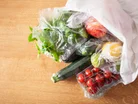
According to the UK’s Department for Environment, Food and Rural Affairs (Defra), single-use plastic bag sales rose by 7% in 2024.
The department found that 437 million plastic bags were sold, up from 407 million in 2023.
This will be the first year that sales have risen since a 5p bag charge was introduced in 2015.

E-commerce's sustainability challenge
Defra’s statistics reveal that online supermarkets play a major role in the uptick in single-use plastic bag sales.
Ocado, a leading online retailer, reported sales of 221 million plastic bags last year, more than half of the total figure.
A spokesman for Ocado said: “Our approach to deliveries is designed to minimise emissions and waste, while keeping customer orders efficient and products in excellent condition from warehouse to doorstep.”
Co-op, Morrisons and Sainsbury’s also observed growth in bag sales.
Bags for Life and paper bags are not subject to the same reporting as single-use bags by Defra.
A Co-op spokesperson said: “As a responsible retailer, we do not sell single-use plastic bags or Bags for Life and haven’t done since 2021 when we converted all our carrier bags to be 100% certified compostable, with all profits from sales going to good causes.”
Tesco, Waitrose and Iceland have successfully ceased the sale of single-use bags since 2021.
Sainsbury’s, for instance, has embraced paper bags, while both Morrisons and Ocado ask consumers to return unwanted bags to delivery drivers for reuse.
Ocado’s circular approach
Since 2015, Ocado has had a closed loop system in place.
In this system, customers are encouraged to return carrier bags to their delivery driver.
The company offers a 10p Bag Recycle Bonus for the bags customers return and has achieved an 89% refund rate on bag returns.
These recycled bags are processed into new ones, potentially enhancing the circularity within the supply chain.
The circularity impact of plastic bags
The surge in single-use plastic bag sales may signify existing gaps in supply chain circularity.
A shortage of collection infrastructure or consumer incentives leads to bags being discarded rather than recycled.
During the last-mile delivery, single-use plastics often prevail due to cost-effectiveness and availability.
This phase of the supply chain remains costly and inefficient, with businesses under constant pressure to satisfy customer demands swiftly.
Switching to more sustainable alternatives could apply further pressure on these final delivery stages.
Pathways to sustainable solutions
Transitioning to environmentally friendly packaging, like paper or compostable materials, may streamline the supermarket supply chain.
To further this effort, retailers might consider reinventing logistics, aiming to develop closed-loop recycling systems.
Through such systems, used packaging can be collected and recycled into new products, fostering an overall more sustainable and efficient supply chain.
Leading by example, Tesco has set a standard by eliminating unnecessary plastic from its supply chain, in the removal of over two billion pieces since the launch of its 4Rs (Remove, Reduce, Re-use, Recycle) packaging strategy in 2019.
This supermarket chain has effectively doubled the volume of recycled material used in its packaging.
Kené Umeasiegbu, Responsible Sourcing Director for Tesco, says: “We all have a responsibility to take care of our planet and removing unnecessary plastic is an important way that Tesco can reduce its environmental impact.”