How Will Climate Change Impact the Future of Trade?
The landscape of international commerce has highlighted the critical importance of adaptability and operational resilience, as supply networks across the globe underwent significant transformation throughout the year.
Confronted by a continuous stream of disruptions and market volatility that shows no signs of abating, organisations worldwide have been forced to evolve their approaches to risk management and operational continuity.
At the World Economic Forum in Davos, Economist Impact introduced the Future of Trade, a comprehensive multi-year programme investigating the ways geopolitical tensions are fundamentally altering global commerce systems.

Reshaping international commerce
While world leaders convened in Davos, Economist Impact unveiled "The Future of Trade", a long-term programme created to support organisations navigating fragmentation, evolving geopolitical landscapes and accelerating technological advancement. The organisation combines creative thinking, event management expertise and international reach to produce economic and social impact analysis, forecasting and scenario modelling.
UNCTAD (UN Trade and Development) serves as a strategic partner supporting this new programme, which debuted at Davos. The launch event brought together business executives, economists and policymakers to examine insights, challenges and potential solutions regarding the evolution of international trade.
As international supply networks have increasingly adopted AI technologies and moved towards comprehensive digitalisation, both the associated risks and the methods of engaging with this digital transformation have evolved. These networks are becoming progressively automated, delivering accelerated outcomes and consequently altering workforce roles. "The Future of Trade" programme draws on extensive independent research examining global commerce and supply networks, offering substantial expertise on how organisations are adapting to this shifting environment.
In May 2025, the "Future of Trade inception report" will be published, presenting additional research and briefings with enhanced detail and specificity. This report will establish a comprehensive roadmap, analysing the present landscape alongside developing priorities for international trade.
Transforming global supply networks
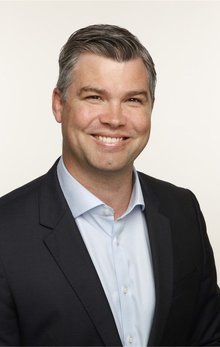
The programme received its official introduction at "The Global Exchange", a half-day forum held during Davos. Throughout the forum, John Ferguson, Programme Lead and Global Head at Economist Impact, examined the primary forces exerting considerable influence on global supply networks in the current era.
These principal forces include:
- accelerated technological advancement driven by AI and automation
- intensifying geopolitical competition
- increasing climate disruption
Individually, these forces present significant disruption, but when combined, they are destabilising supply networks worldwide. Climate disruption affects production methods, with severe weather frequently necessitating transportation rerouting. As competition intensifies, international trade becomes increasingly fragmented while relationships deteriorate.
Additional protective measures are being implemented to safeguard domestic supply networks, leading to reduced collaboration and increased trade conflicts.
"Global trade has moved from a focus on efficiency to a landscape defined by risk, rivalry and weaponisation," says John, speaking at The Global Exchange forum in Davos.
"Our new Future of Trade initiative aims to provide leaders with evidence-based insights to move beyond reactive strategies and shape a system that delivers stability, growth, and opportunity for all."
All sustainability, net zero and sustainable supply chain leaders should attend:
- Sustainability LIVE: The Net Zero Summit - QEII Centre, London, March 4-5
- Sustainability LIVE: The US Summit - Navy Pier, Chicago, April 21-22
Co-located with Procurement & Supply Chain LIVE, these events brings together CSOs, ESG leaders and senior decision-makers at a moment when sustainability, supply chains and commercial performance are increasingly interconnected.
Tickets can be booked online today for The Net Zero Summit and The US Summit. Group discounts available.
Addressing emerging challenges
Confidence in the established multilateral framework is facing significant challenges, as the international trade environment grows more complex and unpredictable. "The Future of Trade" report represents a response to this mounting concern. By conducting rigorous research and facilitating strategic discussions, the programme will produce independent, evidence-driven insights contributing to a more sustainable, resilient and inclusive global commerce network.
The collaboration with UNCTAD expands opportunities to advance global discourse through high-quality data, analysis and insights. The research agenda will examine how ongoing uncertainty is transforming international commerce, concentrating on interconnected priorities.

These priorities encompass:
- Multilateral trade and local democracy: investigating methods to restore multilateral frameworks and establish streamlined regulations and structures could rebuild trust within the contemporary era characterised by AI transformation, geopolitical shifts and climate change.
- Next generation trade: examining how digital trade can be implemented across diverse economies will support exploration of strengthening both digital and environmental commerce.
- Resilient trade networks: by concentrating on maintaining supply chain resilience amid global volatility, the agenda will investigate the contribution of AI to this robustness.
"History shows that recovery is possible. Trade collapsed in the 1930s but was rebuilt over decades of institution-building and liberalisation. Today, the same resolve is required," says John.
"The Future of Trade will generate original insights and evidence in pursuit of building a new trading order that is inclusive, resilient, and sustainable."
Through sustained collaboration and investigation, the subsequent phase of globalisation will be transparent and participatory, resulting in more integrated global supply chains and commercial networks.
Company portals


Executives
John Ferguson
Global Head - Economist Impact