
How Renewable Energy has Eclipsed Fossil Fuels in the EU
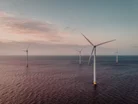
Wind and solar power have achieved a landmark milestone that energy analysts have anticipated for years. In 2025, these renewables together generated more electricity across the European Union than fossil fuels for the first time, according to data from independent energy think tank Ember.
The shift marks a historic turning point in the EU’s power system. Wind and solar accounted for 30% of the bloc’s total electricity generation in 2025, narrowly overtaking fossil fuels, which produced 29%. The rest came largely from nuclear energy.
Solar power led much of this growth. For the fourth consecutive year, solar output expanded by more than 20%, reaching 13% of the EU’s power mix. This surge pushed solar generation ahead of both coal and hydro – an outcome that seemed unlikely only a decade ago.
“As fossil fuel dependencies feed instability on the global stage, the stakes of transitioning to clean energy are clearer than ever,” said Beatrice Petrovich, Senior Energy Analyst at Ember and the report’s lead author.
Renewables defy challenging weather
Remarkably, this breakthrough came during a year when weather conditions typically unfavourable for renewables tested the system’s resilience. Early 2025 saw plentiful sunshine but unusually low wind speeds and reduced rainfall. As a result, hydro generation dropped 12%, and wind output declined by 2% compared to 2024 levels.
Even so, solar generation more than compensated for these dips, keeping renewables’ overall share steady at 48% of EU electricity production. Wind power still supplied 17% of the bloc’s energy – outpacing natural gas, despite the meteorological challenges.
Ember’s analysis shows that 14 EU countries now produce more electricity from wind and solar combined than from all fossil fuels. According to Beatrice, this represents not a temporary fluctuation but "a structural shift in the region’s power system."
All sustainability, net zero and sustainable supply chain leaders should attend:
- Sustainability LIVE: The Net Zero Summit - QEII Centre, London, March 4-5
- Sustainability LIVE: The US Summit - Navy Pier, Chicago, April 21-22
Co-located with Procurement & Supply Chain LIVE, these events brings together CSOs, ESG leaders and senior decision-makers at a moment when sustainability, supply chains and commercial performance are increasingly interconnected.
Tickets can be booked online today for The Net Zero Summit and The US Summit. Group discounts available.
Coal’s decline accelerates
Coal’s long decline deepened dramatically in 2025. The fuel’s share of EU electricity generation fell to a record low of 9.2%, signaling the near end of its role in Europe’s energy mix.
“Coal power is in its terminal decline,” noted Beatrice. “We could say it’s becoming history for the EU.”
Coal power is in its terminal decline. We could say it's becoming history for the EU.
Gas, however, remains a more stubborn component. Gas-fired power generation increased by 8% last year due to low hydro availability, raising import costs by 16% to €32bn (US$37bn). This was the first rise in gas import spending since the 2022 energy crisis, triggered by Russia’s invasion of Ukraine.
“The next priority for the EU should be to put a serious dent in reliance on expensive, imported gas,” Beatrice added.
UK momentum builds with offshore wind
Beyond the EU, similar progress is evident in the UK, which continues to expand its renewable infrastructure despite having left the bloc. The UK’s latest offshore wind auction set new records and showcased the country’s accelerating pace toward cleaner energy.

The government awarded subsidy contracts for eight new offshore wind farms with a combined capacity of 8.4 GW – enough to power 12 million homes by 2030. The projects, valued collectively at US$27bn, attracted twice the financial interest of previous auction rounds, reflecting surging investor confidence.
German utility RWE emerged as the standout winner, securing nearly 7 GW of capacity, including the Dogger Bank South and Norfolk Vanguard projects. SSE, one of Scotland’s leading energy companies, won approval for the first phase of its 4.1 GW Berwick Bank development off the Scottish coast.
Contract prices were set at £89.49 (US$121.05) per megawatt-hour for Scottish projects and £91.20 (US$123.37) per MWh for those in England and Wales. Floating windfarms – engineered for deeper North Sea waters – fetched higher guarantees at £292.87 (US$400.38) per MWh to reflect their complexity and cost.
“We’ve secured a record-breaking 8.4 GW of offshore wind,” said Ed Miliband, the UK’s Energy Secretary. “This is the largest amount of offshore wind procured in any auction ever in Britain or indeed Europe.”
Miliband also emphasised the economic benefits, noting that these prices are “40% lower than the alternative cost of building and operating a new gas plant.”
The success of the auction gives the UK’s net zero ambitions significant momentum. However, to meet its 2030 target of generating 43–50 GW of offshore wind, the government will need to match this year’s results again in the next auction cycle.
The future of energy storage
While generation made headlines, energy storage is also emerging as a critical pillar of Europe’s renewable infrastructure. Rapid expansion in battery installations – particularly in Germany, Italy and Poland – is enabling solar and wind power to be stored and released during evening demand peaks.
According to Ember, this growing storage capacity will help stabilise wholesale electricity prices and enhance energy system flexibility as renewables’ share continues to rise.
Average wholesale power prices increased 11% during gas-heavy hours in 2025 compared to the previous year, underscoring how fossil fuel dependence still drives volatility and higher costs for both industry and consumers.
As Beatrice observed, Europe’s challenge is no longer proving that renewables can power its economy – it’s ensuring that storage, grids and flexibility keep pace.
Company portals





Executives

Beatrice Petrovich
Senior Energy Analyst