IEA: Why The Lithium Battery Market is Booming
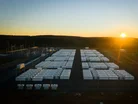
Since 2020, the global deployment of lithium-ion batteries has surged sixfold, driving the market’s value to an estimated US$150bn.
Behind this headline, however, lies a more nuanced picture of a technology quickly transforming transport and energy systems worldwide.
A new study by the International Energy Agency (IEA) attributes most of this expansion to soaring demand for electric vehicles, which account for over 70% of all battery deployment. In fact, one in four cars sold globally last year was battery-powered.

At the same time, grid-scale storage represented about 15% of the market, highlighting how batteries have evolved from powering personal devices to becoming critical infrastructure for power systems. A decade ago, laptops, tablets and smartphones made up nearly half of global battery production, but that share has now dropped below 5%.
The price war
So what drove last year’s dramatic rise in output?
Falling costs certainly accelerated adoption, though the trend also exposed weaknesses in the market’s overall sustainability.
According to the IEA, the average price of batteries declined by 8% in 2025, thanks to efficient manufacturing techniques and intense competition among producers. Grid storage system prices fell to just a third of 2020 levels, making batteries cost-competitive with gas peaker plants in some regions.
Yet these gains have clear geographic caveats. The IEA found that Chinese battery packs were roughly 30% cheaper than those produced in the US and 35% lower than European prices. Meanwhile, lithium iron phosphate (LFP) batteries saw prices drop by more than 15%, compared with under 5% for nickel-rich types.
As a result, LFP batteries now cost 40% less than nickel-manganese-cobalt versions and dominate more than half the EV market, as well as over 90% of global grid storage. While procurement teams may welcome these figures, the IEA cautions that such low prices “will be unlikely to last,” with many producers already “haemorrhaging money.”
Chinese dominance
The data also reveal a dependency that policymakers are only beginning to confront.
In 2025, China manufactured over 80% of all batteries, while Chinese, Korean and Japanese firms accounted for nearly all global cell production.
The EU and US contributed only modest volumes, still importing most of their components from China – a sign of how deeply this reliance runs. Today, almost every battery supporting electricity grids depends on China for at least one critical link in the supply chain.
According to the IEA, 70% of EVs built outside China contain batteries or components from Chinese suppliers, while more than 90% of battery storage worldwide uses LFP cells made in China.
Beijing’s export controls on key components – introduced in 2023 – are now exposing weaknesses in non-Chinese supply chains.

Meanwhile, Korean producers are moving fast to expand their own LFP capacity, but they face formidable competition from experienced Chinese incumbents in an increasingly oversupplied market.
All sustainability, net zero and sustainable supply chain leaders should attend:
- Sustainability LIVE: The Net Zero Summit - QEII Centre, London, March 4-5
- Sustainability LIVE: The US Summit - Navy Pier, Chicago, April 21-22
Co-located with Procurement & Supply Chain LIVE, these events brings together CSOs, ESG leaders and senior decision-makers at a moment when sustainability, supply chains and commercial performance are increasingly interconnected.
Tickets can be booked online today for The Net Zero Summit and The US Summit. Group discounts available.
What are the challenges?
Even so, manufacturing capability is expanding in both Europe and the US.
Governments have attracted large-scale investments in the battery sector, leveraging EV growth to underpin demand.
However, the IEA estimates that production costs in the EU and US remain up to 50% higher than in China. Matching the efficiency of Chinese manufacturing – where yields routinely exceed 90% – will take years of sustained investment.
New producers typically waste far more materials during early production, making profitability elusive until operations mature. The IEA concludes that regions without strong industrial foundations will need “patient capital” and partnerships with experienced manufacturers to become competitive on the world stage.