
What is the Geopolitical Impact on Germany's Energy Mix
Germany had believed it had solved its energy security conundrum.
After Russia’s 2022 invasion of Ukraine, European nations moved swiftly to impose economic sanctions on Moscow. The move constrained Vladimir Putin’s ability to fund the war, but it also severed the EU’s ties to its largest gas provider.
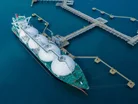
Berlin responded with urgency. The government commissioned several floating storage and regasification units and signed long-term LNG contracts with the US. Yet, as a new analysis suggests, Germany may simply have replaced one dependency with another.

According to a recent report by the Institute for Energy Economics and Financial Analysis (IEEFA), approximately 92% of Germany’s LNG imports last year came from the US – up from 82% in 2023. Only four years earlier, Russia had supplied roughly 52% of Germany’s overall gas imports.
The costly pivot to LNG
Germany’s turn to LNG has come at considerable expense – and the data show it may not align with actual demand. Parliament earmarked €9.8bn (US$11.3bn) to support LNG infrastructure expansion between 2022 and 2038, while the European Commission approved a further €4.06bn (US$4.68bn) grant to offset losses incurred by state-owned Deutsche Energy Terminal, which operates four floating units.
That support could grow to €4.96bn (US$5.72bn) if losses exceed projections.
Despite this, Germany fed LNG into its gas grid at just 36.3%, far below the EU average of 50.8%. National gas consumption has also declined over the same period – falling 15% in 2022 and remaining largely stable since.
The IEEFA report warns that if all existing LNG contracts run their course, Germany will be committed to importing 26.2 billion cubic metres of LNG by 2030, nearly triple its 2025 import volume.
It raises the question: why is Germany planning to expand LNG capacity to 56.1 billion cubic metres by 2028?
Heat pumps take centre stage
Amid the apparent missteps, one pillar of Germany’s energy policy stands out. Between 2022 and 2025, the country installed more than one million residential heat pumps, cutting cumulative gas demand by roughly 40 terawatt-hours over that period.
The IEEFA notes this shift avoided the need for 16% additional LNG imports across three years, saving Germany about €1.3bn (US$1.5bn) in import costs. In 2025, heat pump sales surpassed gas boiler sales for the first time, with almost 300,000 units sold over twelve months.

The report concludes that ongoing electrification of heating – together with energy efficiency programmes and renewable capacity growth – offers Germany a far stronger route to energy security than investment in imported fossil fuel infrastructure.
Hydrogen’s complex role
Germany’s power sector strategy still leans heavily on hydrogen. The government plans to construct 10 gigawatts of hydrogen-ready gas-fired plants to support its transition away from natural gas. Yet the IEEFA remains sceptical.
It argues that high production costs, infrastructure challenges, and project risks mean hydrogen’s role may be far smaller than policymakers predict. Germany’s Network Development Plan currently projects 17–28 gigawatts of hydrogen power capacity by 2045 – equal to around 87% of its existing gas-fired plant capacity.
However, IEEFA modelling indicates that if Germany prioritises renewables, battery storage, and cross-border grid connectivity, it could source as little as 5% of its electricity from both hydrogen and natural gas combined by 2045.
Uncertainty also surrounds the decarbonisation of gas plants. The report casts doubt on carbon capture and storage, noting that Europe lacks operational CCS projects attached to gas plants, and estimating capture costs at over €150 (US$173) per tonne of CO₂ – around twice the current EU ETS price of €76 (US$88). It warns that decarbonising Germany’s 10GW gas portfolio through CCS could push subsidy costs into the hundreds of billions.
Utilities face mounting risks
Ultimately, the financial exposure will rest with major utilities. Corporations like RWE, EnBW, and Uniper together operate much of Germany’s roughly 70GW of gas and coal-fired capacity – and all have signed long-term LNG contracts lasting 15 to 20 years.
The IEEFA cautions that this is creating a mismatch: companies committed to decarbonising their gas assets are simultaneously locking in supply agreements that presume those same assets will remain in heavy use well into the 2040s.
The report’s authors deliver a clear message, summed up by Ana Maria Jaller-Makarewicz, Lead Energy Analyst for IEEFA’s Europe team:
“The Middle East crisis is Germany’s biggest wake-up call to electrify since Russia’s 2022 invasion of Ukraine,” she says.
“There is significant potential for Germany to accelerate heat pump deployment and curb its reliance on gas imports even further.”

Executives

Ana Maria Jaller-Makarewicz
Lead Energy Analyst for IEEFA’s Europe team