Inside BMW's Germany Sustainable Battery Recycling Facility
BMW Group has partnered with Encory to launch the Cell Recycling Competence Centre (CRCC) in Salching, Bavaria, marking a significant advancement in sustainable battery manufacturing
The facility will employ an innovative technology developed by BMW Group that removes the need for energy-intensive thermal processing, working towards closing the resource loop and enhancing sustainability across the battery production cycle.
The BMW Group reported that electrified vehicles made up 26% of its total global sales in 2025, with fully electric vehicles accounting for approximately 18%.
In Europe specifically, the company experienced notable growth of 28.2% in fully electric vehicle sales, underlining the increasing demand for sustainable transportation solutions.

Direct recycling advances circular economy
Encory, a joint venture equally owned by BMW Group and Interzero Group, an environmental services provider specialising in recovery, reprocessing and recycling solutions for vehicle components, has collaborated with BMW Group to establish the CRCC.
The centre will deploy a direct recycling process that mechanically breaks down valuable raw materials including lithium, nickel and cobalt from battery cell manufacturing and complete battery cells into their components, which are then reintegrated into the production process.
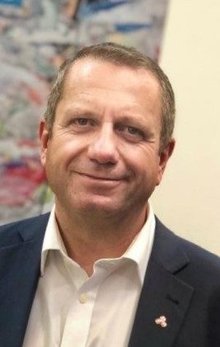
Alexander Maak, Managing Director of Encory, says: "With this competence centre, we are taking a major step toward a circular economy. Through direct recycling, we can efficiently recover the active materials from the battery cells and integrate them directly into the battery cell manufacturing process.
"This avoids complex preparation processes or additional extraction of critical metals such as lithium, cobalt and nickel, creating a true circular economy."
According to BMW Group estimates, the CRCC could process an annual volume of recycled battery cell material in the mid-double-digit tonne range once the facility reaches full operational capacity. This equates to several tens of tonnes of material being processed each year.
Eliminating energy-intensive processing steps
The direct recycling process represents a departure from commonly used recycling methods such as hydrometallurgical processing and pyrometallurgical processing, both of which involve "black mass" mechanical pre-treatment.
In the direct recycling approach, raw materials from battery cells do not require breaking down into individual components before new active material is produced.
Rather than converting raw materials entirely to their original state, the process feeds them back into the cell production cycle. This methodology, developed by BMW Group, eliminates conventional energy-intensive chemical or thermal processing previously required.
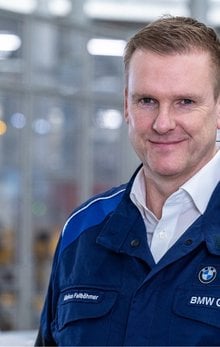
Markus Fallböhmer, Senior Vice President of Battery Production at BMW AG, says: "Our direct recycling process puts us at the forefront of the industry. This technology has tremendous potential to further optimise battery cell production."
The recovered raw materials will be directly reused in pilot production of battery cells at BMW Group's Cell Manufacturing Competence Centre (CMCC) in Parsdorf, Bavaria, creating an integrated sustainable manufacturing ecosystem.
Addressing future recycling demands
According to estimates from management consultancy McKinsey, over 100 million EV batteries are expected to reach retirement in the next decade, highlighting the urgent need for effective recycling infrastructure.
McKinsey notes that innovative recycling processes such as direct recycling aim to increase material recovery rates whilst decreasing energy and reactant consumption, emissions and wastewater.
Direct recycling could play an increasingly vital role in battery cell manufacturing in the coming years, reducing reliance on primary resources and offering a more sustainable alternative to existing recycling options.
The CRCC represents a concrete step towards establishing the circular economy infrastructure necessary to support the growing electric vehicle market.



Executives
Alexander Maak
Chief Executive Officer
Dr. Markus Fallböhmer
Bereichsleiter Produktion Hochvoltspeicher, Energiemodul