
How Canon Plans to Cut Carbon Emissions by 42% by 2030

Canon’s 2026 Sustainability Report shows that the company is now taking a more unified approach toward environmental accounting and governance.
Canon has set up a new Sustainability Committee, led by the Chief Financial Officer, to focus on the life-cycle impacts of its activities and products.
With more than 300 business units worldwide, Canon is working to balance market growth with strict environmental limits.
As global supply chains face tougher regulations, the data shows that making real progress demands overcoming major logistical challenges.
“Canon’s corporate philosophy is kyosei. It conveys our dedication to achieving a society where all people, regardless of culture, customs, language, or race, happily live and work together,” writes Fujio Mitarai, Chairman and CEO at Canon, in the report.
“Looking ahead to the next five years, I am keenly aware of three major trends: increasing global fragmentation, the accelerating social implementation of AI, and increasingly acute labour shortages.
“Addressing social issues such as climate change, the efficient use of resources, and human rights is not just a matter of corporate social responsibility; it is also an essential condition for continuing to do business as a global corporation.
“In 2025, among the sustainability categories to be addressed to realise our corporate philosophy of kyosei, we revisited material issues. We hope to contribute to the achievement of the SDGs through our initiatives to address the Group’s material issues and our disclosure.”
Improvements in value chain oversight
Canon sets carbon targets for every stage of manufacturing.
The company now requires internal checks before moving any new model from prototype to mass production.

If a division does not meet basic resource efficiency standards, production stops.
Social indicators also show progress, especially in how Canon oversees its corporate practices.
The company’s Human Rights Secretariat carried out complete due diligence across all administrative and operational divisions and finished all scheduled reviews.
This helps Canon prepare for new regulations, such as the European Union Corporate Sustainability Due Diligence Directive, and strengthens compliance in countries outside Japan.
Challenges slow supply chain integration
While internal product development is becoming more controlled, tracking scope 3 emissions shows how hard it is to monitor indirect impacts.
For global manufacturers, measuring the carbon footprint from logistics, distribution, and raw material harvesting is a major challenge.
Collecting accurate carbon data from third-party suppliers is still a big challenge and slows down the adoption of full value-chain metrics.
Recycling imaging technology is standard, but the company expects that expanding full-component remanufacturing throughout regions will face tough regulatory and trade barriers.
Shipping parts internationally for closed-loop processing is difficult, so local circular economy efforts are still fragmented.
Emissions performance and energy demand
Canon reported mixed results in its energy consumption and carbon reduction efforts.
Total absolute greenhouse gas emissions from manufacturing sites reached about 1,068 kilotons of carbon dioxide equivalent in the baseline year. The company intends to reduce this to 620 kilotons by 2030.
This planned 42% absolute reduction depends on a mix of structured energy-efficiency measures and the purchase of renewable energy certificates.
Operational energy use varied across the business because of changes in post-pandemic production schedules and shifting data centre needs.
While total emissions from production centres declined, non-manufacturing sites saw small increases in power use due to additional computing infrastructure.
To meet this heightened electricity demand, the company expanded its procurement of renewable power, with several manufacturing bases achieving 100% renewable electricity consumption via onsite solar arrays and corporate tariffs.
Company portals

Executives
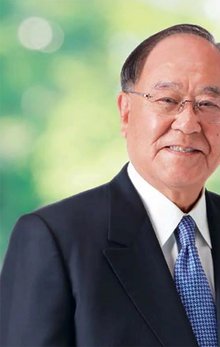
Fujio Mitarai
Chairman & CEO