Inside CVS Health’s Sustainability & Net Zero Strategy

Health solutions company CVS Health integrates retail, pharmacy and insurance services to improve community health throughout the US.
The company’s latest Healthy 2030 Impact Report positions the company as a healthcare and retail giant trying to hard‑wire sustainability and equity into its core business model, with a particular focus on climate, packaging and human capital.
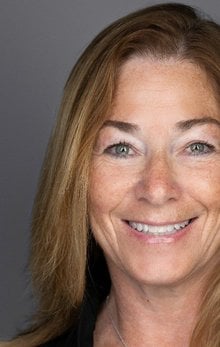
“At CVS Health, we generate the greatest impact by connecting assets and expertise from across our enterprise to tackle America’s most pressing health challenges,” says Sheryl Burke, Chief Sustainability Officer, CVS Health.
“These challenges are complex, with health outcomes often impacted by a multitude of factors at the individual, societal and environmental levels. We believe solutions must take a holistic approach.
“Across our impact strategy, we are combining our reach and knowledge of local communities, the power of our philanthropic partnerships, and innovative health care solutions made possible through advanced data, analytics and technology.”
Healthy 2030: strategy and governance
At the heart of CVS Health’s sustainability strategy is its Healthy 2030 framework, which organises impact across four pillars:
- Healthy People
- Healthy Business
- Healthy Community
- Healthy Planet
This framework is built on a 2023 impact‑based prioritisation assessment with BSR and is aligned to GRI Standards, signalling a shift from box‑ticking materiality to an explicit focus on the severity and likelihood of impacts on people, the environment and enterprise value.
Oversight sits firmly at board level. The Nominating and Corporate Governance Committee, together with the President and CEO, is formally charged with monitoring climate risks, emissions progress, resource reduction and human capital matters, with the Chief Sustainability Officer providing semi‑annual briefings and leading execution via a cross‑functional steering committee. Remuneration for key leaders is partially linked to performance against business plans that embed Healthy 2030 objectives, tying culture, impact and accountability together.
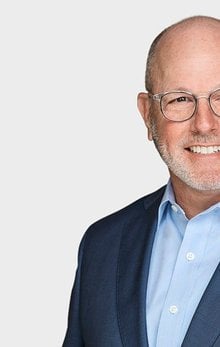
“CVS Health has more than 300,000 colleagues from every corner of our country, reflecting the communities we serve,” says J. David Joyner, President and CEO, CVS Health.
“We see how strong communities and a healthy planet directly impact the physical and mental well-being of individuals. Our goals are more readily achieved when we are all guided by a common purpose and an uncommon commitment to care.”
Human health and planet health
CVS Health was among the first companies globally to secure SBTi validation for its net zero targets, underscoring a commitment to reduce absolute Scope 1, 2 and 3 emissions by 47% by 2030 and to reach net zero across the value chain by 2050 from a 2019 baseline.
The company’s 2024 appendix reports a 29% reduction in Scope 1 and 2 emissions versus 2019, alongside a 59% drop in Scope 3 Category 1 (purchased goods and services) emissions since the baseline, although emissions in that category ticked up 3% year‑on‑year between 2023 and 2024.

The company is targeting 50% renewable electricity by 2040 and has already executed agreements representing more than 969,200 MWh of renewable energy, with around 102,000 MWh utilized in 2024. CVS integrates TCFD and ISSB‑aligned climate risk processes into enterprise risk management, using scenario analysis across short‑, medium‑ and long‑term horizons and stress testing for physical and transition risks, from extreme heat to low‑carbon transport shifts.
“We know that the health of the environment impacts human health,” Sheryl explains.
“As part of our goal to become America’s leading and most trusted health care company, it is our charge to not only reduce our own environmental impact, but to shape a more resilient health care system for the future.
"Work through our climate resiliency strategy resulted in new investments in renewable energy as we continue down a defined path toward net zero emissions by 2050.”
Company portals

Executives
David Joyner
President and Chief Executive Officer, CVS Health
Sheryl Burke
Springboard National Trust Member