
Inside the IEA’s Data on Off-Grid African Electrification
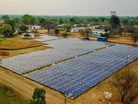
According to the International Energy Agency (IEA), around 600 million people in Africa still lack access to electricity.
Even though progress has been made over the past decade, electrification efforts have slowed since the COVID-19 pandemic due to rising debt, fragile utility finances and worsening affordability.
At the same time, off-grid solutions, particularly solar and battery-based systems, are expanding rapidly.
In sub-Saharan Africa, off-grid systems accounted for more than half of new electricity connections in 2022.
Scaling these solutions now depends less on technology and more on smarter planning, better data and lower costs.

The limits of traditional access planning
"Closing the access gap requires greater scaling, which today is hindered by traditional planning and customer acquisition approaches, which often relies on workers going village-by-village to assess to the current electrification and energy needs at the community level," writes the IEA.
These approaches are slow, costly and often outdated by the time decisions are made.
In many regions, utilities still lack reliable data on which buildings have access to power.
Night-time satellite imagery is commonly used as a proxy, but this method can miss households using small off-grid systems and often lacks the detail needed for targeted investment.
Mapping energy demand building by building
To address this gap, the IEA, working with researchers from Massachusetts Institute of Technology, University of Massachusetts Amherst and Electricity Growth and Use In Developing Economies, are developing an open-source, AI-driven model to map electricity access and demand across Africa.
The model combines satellite imagery, building footprint data and utility meter information to estimate whether individual buildings have access to electricity and how much power they are likely to use.
By using machine learning, the system identifies patterns linked to energy demand, such as building size, location, surrounding infrastructure and proximity to markets.
When tested, it identified electrified buildings with more than 80% accuracy and reduced errors in demand estimates by 40% compared with existing tools.
A step change for utilities and off-grid developers
Applied at national scale, the model could allow for planners, utilities and off-grid companies to identify high-potential customers and underserved communities without extensive field surveys.
If possible, this could reduce customer acquisition costs and enables more precise pre-feasibility studies for grid extensions, mini-grids and standalone systems.
Crucially, it can pinpoint buildings on the margins of electrified areas, including informal settlements and urban infill, where connection costs are low and ability to pay may increase quickly.
By estimating electricity demand at building level, the tool also supports better system sizing, grid planning and financial forecasting.
“Why is this important? Because it enables solution providers to target customers precisely, reducing costs and improving feasibility studies for renewable mini-grids, helping serve customers at lower costs, which is a tremendous benefit in the region,” writes Sorough Kheradmand, Global Head of Sustainability at Schneider Electric, on LinkedIn.
“We are at a unique moment where AI can accelerate our ability to solve sustainability challenges at scale.
“What used to take years of field research now happens in weeks.
“What required massive teams now needs smart algorithms.”
Revealing the affordability challenge behind access
Early results from Ghana, Senegal and Uganda reveal a more complex picture of energy access.
Many households with electricity consume far less than the benchmarks used to define basic energy needs under the IEA’s Multi-Tier Framework.
Company portals

Executives

Sorouch Kheradmand
Global Head of Sustainability at Schneider Electric