Veolia: Waste Heat Networks Could Cut UK Carbon by 15MT
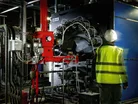
District heating could represent one of the most sustainable approaches to space heating available today, yet it remains significantly underfunded across many markets.
The technology operates on remarkably straightforward principles. Instead of individual boilers in each property, district heating captures waste thermal energy from a central power plant and distributes it through underground pipes to homes across a region.
This approach could prevent unnecessary thermal energy waste, potentially reducing both energy bills and carbon emissions.

While district heating demands substantial infrastructure investment, the system could be achievable in most countries given their existing construction capabilities and climate conditions.
Denmark provides a compelling example. Despite being a coastal Northern European nation where temperatures can plummet below -30C, district heating serves approximately 98% of buildings in Copenhagen.
Modern district heating networks can utilise waste energy from diverse sources, including incinerators, power plants, heavy industry facilities and data centres.
Yet despite these advantages, district heating has not emerged as a universal solution. Understanding the barriers to adoption and examining current expansion efforts could prove instructive.
Current UK infrastructure
The UK currently operates limited district heating networks, accounting for just 2-3% of the country's heating provision, serving around 500,000 homes nationwide.
However, the British government intends to invest substantially in district heating capacity going forward, targeting 18-20% of homes heated through circular networks by 2050.
Veolia, the French utility company, announced a US$1.3bn pipeline of district heating projects scheduled for award by 2030 through its new Ecothermal Grid offering in the UK market.
The company has already secured US$273m worth of projects, with developments planned across Wiltshire, London, Bristol, Yorkshire and Cambridgeshire.
According to market projections, the UK district heating sector could be worth US$104bn by 2050 if the government's expansion plans proceed.

Veolia's project developments
Among the company's completed projects is Phase One of its Southwark 2.0 District Heat Network in south London.
The extension currently provides over 2,500 homes with heat generated from Veolia's energy-from-waste plant in the area, saving approximately 8,000 tonnes of CO₂ annually.
When fully operational, the network will supply nearly 7,000 homes and save an additional 14,000 tonnes of CO₂ each year.
Veolia has also been selected by Wellcome Genome Campus to design and build a fifth-generation heating and cooling network in Cambridgeshire.
This system will recover geothermal heat alongside waste heat from a data centre facility as the campus expands from 125 to 440 acres.
The company's portfolio demonstrates the versatility of district heating applications across different urban contexts. From densely populated London boroughs to expanding research campuses, these networks can be tailored to local energy sources and demand patterns.
Veolia's approach integrates multiple heat sources within single networks, maximising efficiency and resilience. By combining energy-from-waste facilities, geothermal resources and industrial waste heat, the company creates robust systems that can adapt to changing energy landscapes.
Policy frameworks for expansion
Investment alone cannot drive district heating expansion. Government policy must streamline development processes to enable growth.
Veolia is currently calling on the UK government to implement three specific policy changes to support the sector's development.
The company wants energy from waste facilities to receive reduced UK Emissions Trading Scheme allowance liabilities when supplying heat to local networks.
Veolia is also pushing for long-term funding mechanisms beyond the existing Green Heat Network Fund to ensure continued project development.
Perhaps most significantly, the company advocates for mandatory connections requiring new and certain existing buildings to connect to and use local heat networks.
"Veolia's ambition is to be at the forefront of a new wave of heating networks across Europe, and ultimately to become the number one player in urban heating in Europe," says Estelle Brachlianoff, Chief Executive Officer of Veolia.
All sustainability, net zero and sustainable supply chain leaders should attend:
- Sustainability LIVE: The Net Zero Summit - QEII Centre, London, March 4-5
- Sustainability LIVE: The US Summit - Navy Pier, Chicago, April 21-22
Co-located with Procurement & Supply Chain LIVE, these events brings together CSOs, ESG leaders and senior decision-makers at a moment when sustainability, supply chains and commercial performance are increasingly interconnected.
Tickets can be booked online today for The Net Zero Summit and The US Summit. Group discounts available.
Buildings currently account for 37% of the UK's CO₂ emissions through space heating, industrial heating and hot water provision.
According to Veolia estimates, if the government's 2050 target is met, district heating networks could help deliver 15 million tonnes of carbon savings—a potentially significant contribution to climate action.
Gavin Graveson, Senior Executive Vice President for Veolia's Northern Europe Zone, believes his firm can contribute to that journey given appropriate regulatory support from Westminster.
"To encourage further investment in decarbonised heat in line with its 2050 targets, the government could use the UK Emissions Trading System to incentivise electricity producers to supply local heating networks," Graveson says.
"Once the infrastructure is in place, the networks must also be fully utilised to optimise their profitability and carbon efficiency. Mandatory connections would guarantee operators stable demand."
Company portals


Executives
Estelle Brachlianoff
Group CEO

Gavin Graveson
CEO of Veolia, Asia Pacific Zone