Is Climate Change Behind Spain’s Severe Weather Warnings?
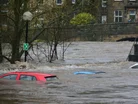
Spain has faced extreme weather events in 2025 including destructive flooding and heatwaves.
These severe weather events can threaten lives, infrastructure and ecosystems.
Heavy rainfall and flooding in the country’s northeastern region turned streets into rivers on 14 July which the Spanish meteorological agency (AEMET) warned could bring “significant danger”.
Spain’s Environment Ministry said that June 2025 was the hottest month on record with temperatures averaging 3.6°C higher than normal.
The Ministry also announced that high temperatures caused 1,180 deaths in Spain over the previous two months.
Does climate change impact flooding?
Flash floods that hit Spain in Autumn of 2024 killed at least 217 people and were caused by Isolated Depression at High Levels, known as DANA in Spanish, according to the World Meteorological Organisation (WMO).
This can occur when warm surface heat meets a sudden cold invasion from polar regions.
While it is not clear if a similar weather system caused the July 2025 floods, the Intergovernmental Panel on Climate Change (IPCC) says that extreme weather events causing floods and droughts have become more likely and severe due to anthropogenic climate change.
“As a result of rising temperatures, the hydrological cycle has accelerated,” said WMO Secretary-General Celeste Saulo.
“It has also become more erratic and unpredictable, and we are facing growing problems of either too much or too little water.
“A warmer atmosphere holds more moisture which is conducive to heavy rainfall.”
Omar Baddour, Chief of Climate Monitoring at WMO, said: “Climate change is expected to make these systems more intense because of warmer sea waters and increasing moisture in the atmosphere.”
Does climate change impact heatwaves?
Heatwaves are described by the WMO as “a period where local excess heat accumulates over a sequence of unusually hot days and nights”.
These, like floods, are worsened by human influenced climate change according to the IPCC.
“Globally, population exposure to heatwaves will continue to increase with additional warming, with strong geographical differences in heat-related mortality affecting those with the least resources and without additional interventions and adaptation,” the WMO says.
According to the IPCC’s Sixth Assessment Report released in 2021, wildfires, droughts and other extreme weather events are also expected to increase in frequency and intensity due to the human-caused rise in greenhouse gases.

“Globally, population exposure to heatwaves will continue to increase with additional warming, with strong geographical differences in heat-related mortality affecting those with the least resources and without additional interventions and adaptation,” the WMO says.
According to the IPCC’s Sixth Assessment Report released in 2021, wildfires, droughts and other extreme weather events are also expected to increase in frequency and intensity due to the human-caused rise in greenhouse gases.
Adapting to climate change
The IPCC says that 3.6 billion people are highly vulnerable to the impacts of climate change, including extreme weather events.
A US$1.8tn investment in early warning systems, climate-resilient infrastructure, resilient water resources and other mitigation methods could generate US$7.1tn through avoided costs and social and environmental benefits according to the Global Commission on Adaptation.
UNEP’s Adaptation Gap Report 2023 says that adaptation costs in developing countries could reach US$387bn per year by 2030 but finance reached just US$32.4bn in 2022.
António Guterres, Secretary-General of the United Nations, in 2023 said: “Storms, fires, floods, drought and extreme temperatures are becoming more frequent and more ferocious, and they’re on course to get far worse.
“Lives and livelihoods are being lost and destroyed, with the vulnerable suffering the most.
“Adaptation plans must be transformed into investment plans, with new collaborative models that bring together governments, funders, development partners and civil society.”