Why Leaders are Turning to Nature-Based Solutions

In one of the final panel sessions at Sustainability LIVE: The Net Zero Summit 2026, four sustainability leaders explored the role of nature-based solutions and why they are no longer peripheral to corporate climate strategies – they are central to them.
The panel brought together voices from insurance, food and beverage, property and restoration technology.

From clothing brand to restoration operating system
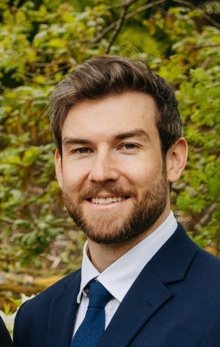
Adam McLaughlin, Enterprise Partnership Executive at Veritree, opened with the origins of the organisation, born out of a pivot from direct planting to verification. Founded on the back of clothing brand TenTree, which plants 10 trees for every article sold, Veritree emerged when the founders looked to scale and realised they couldn't answer a critical question from investors: where exactly are the trees?
After visiting projects on the ground, the founders found that while good work was being done, there was a total lack of data – no one knew which trees belonged to whom or how many were actually surviving.
"Planting a tree might be easy," Adam noted, "but actually growing a resilient forest is difficult."
Veritree was built to solve this by providing an "operating system" for restoration: an app that puts monitoring tools directly into the hands of local planters to track smart forest design, ground-level data collection and multi-year survivability.
The platform now spans 15 global projects, over 250,000 data points and more than 20,000 businesses. "When we lead with transparency, we're not just planting trees, we're building trust."
The cost of doing nothing
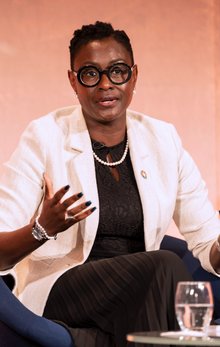
For Lamé Verre, Sustainability Director for Net Zero at The Crown Estate, nature-based solutions sit at the heart of an unusually diverse portfolio — 200,000 acres of tenant farmland, 50% of the UK coastline and significant offshore seabed holdings.
The Crown Estate has committed to returning 15% of its farmland to nature, is actively generating woodland credits and is progressing peatland restoration in Wales. But Lamé was equally emphatic about the need for realism. "When I look at my net zero trajectory, it doesn't get to zero without a portion of it being offset," she said, adding that the organisation is developing a marketplace to connect its real estate customers with high-quality UK nature credits.
Her broader message was urgent: "The better question is not what this will cost, it's what is the impact of doing nothing. That is the asset value you're going to lose anyway."
Nathalie Alquier, Chief Sustainability Officer at Danone, brought a supply chain perspective stretching back decades. With more than 50,000 farmers in Danone's agricultural supply chain and a long-standing role as the first private entity partner to the UN's Ramsar Convention on wetlands, nature-based solutions are embedded in the company's operations rather than bolted on.
Danone's Livelihoods Fund, created in 2019, invests solely in nature-based carbon credits. Nathalie also raised the underappreciated role of the water cycle, noting that 60% of the world's water exists as "green water" locked in vegetation. "When you protect the land, you protect the water cycle," she said.
"That is the resilience of the future."
Insurance, coalitions and the power of collaboration
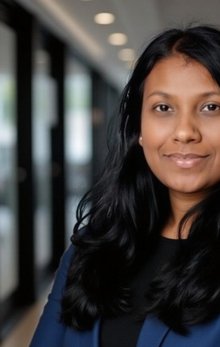
Leah Ramoutar, Director of Environmental Sustainability at Aviva, offered the view from insurance – an industry with perhaps the most direct financial exposure to climate inaction. "The biggest return for us is that the loss does not materialise," she said. Aviva funds large-scale restoration projects, directly invests in nature as an asset class and runs a Climate Transition Real Estate Fund backing ecosystem resilience projects across Scotland.
Leah also pointed to the power of coalitions, citing Aviva's flood action coalition as a model for bringing insurers, investors, landowners and local authorities around shared financing mechanisms.
The panel closed with a challenge to the room. Lamé put it plainly: "This is not something sustainability professionals can solve in an echo chamber. When you come back tomorrow, bring your finance team."
Nathalie agreed, arguing that the pilot cases exist and the mechanisms are in place – what's needed now is scale, and that requires capital beyond any single company's P&L.
Adam's parting advice was straightforward: whether you're a large business or a small one, make sure nature is genuinely integrated: "That's when these programmes become resilient, and that's when they'll actually stick around."
Company portals




Executives
Adam McLaughlin
Enterprise Partnership Manager
Lamé Verre
Director - Net Zero
Leah Ramoutar
Director of Environmental Sustainability
Nathalie Alquier
Chief Sustainability Officer