Lloyds Bank & Wildfarmed: Funding Regenerative Agriculture
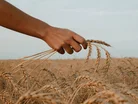
The UK’s Farming Roadmap 2050 sets out the Government’s long-term strategies for the farming sector.
Released in June 2026, it provides a framework to help UK farmers adapt to evolving markets, technologies and environmental conditions.
Lloyds Banking Group aims to support farmers through this transition towards future-proofing their business, launching the Food & Nature Resilience Fund alongside Wildfarmed.
Lee Reeves, UK Head of Agriculture and Healthcare for Lloyds Banking Group, writes on LinkedIn: “Farmers are being asked to navigate uncertainty, invest in productivity, adapt to climate risk, improve resource efficiency and respond to changing market and supply chain expectations.
“Doing so requires the confidence and financial support to plan ahead and invest for the long term.
“At Lloyds Banking Group, we’re continuing to build the support available to farmers as they navigate this transition. We continue to help farmers turn long-term ambition into practical, investable plans through specialist relationship managers, environmental baselining, trusted partnerships and tailored finance propositions.”
What is the Food & Nature Resilience Fund?
Lloyds Banking Group has teamed up with Wildfarmed, a regenerative food and farming business.
The pair have launched the Food & Nature Resilience Fund, which brings together finance from banks, utility companies and insurers.
It will reward farmers for delivering improvements in regenerative agriculture areas such as biodiversity, soil health, water quality and carbon reductions.
The fund aims to reinforce the belief that nature recovery and food production go hand in hand, protecting the environment while strengthening food supply chains.
Khadija Ali, Group Director, Sustainability and Responsible Business at Lloyds Banking Group, said on LinkedIn: “Some challenges are too big for any one sector to solve alone. That’s why Lloyds Banking Group and Wildfarmed have launched the Food & Nature Resilience Fund to help scale investment into regenerative farming across the UK.
“Financial barriers remain the biggest obstacle to farmers switching their practices, with 92% of farmers polled by Wildfarmed saying as much.
“By pooling investment across sectors, this new fund aims to create a model that reflects farming’s central role in a resilient economy, rewarding them not just for what they produce, but for the resilience, biodiversity and natural capital they help sustain.”
About Wildfarmed
Wildfarmed was founded in 2018 with a mission to grow food in a way that benefits people, the planet and farmers.
Through producing wheat, oats and barley, it aims to increase biodiversity, improve soil health, minimise water pollution and reduce carbon.

The Zero Carbon Forum calculated that if every operator in the UK hospitality and brewing sector switched to Wildfarmed flour and barley, it could save 3.6 million tonnes of carbon by 2030.
Its partnerships, like the one with Lloyds Banking Group, aim to bring together resources and capital to spread awareness of sustainable food production and support farmers in adopting regenerative practices.
Andrew Walton, Chief Sustainability Officer and Chief Corporate Affairs Officer at Lloyds Banking Group, writes on LinkedIn: “We know farmers are being asked to navigate significant change.
“The government’s Farming Roadmap sets out the direction of travel, but the question now is how that transition works in practice and how the costs and challenges are shared.
“As the UK’s largest agricultural lender, this partnership is a strategic next step for us. We’re helping bring together geospatial data, cross-sector initiatives and new sources of finance to support British farmers and strengthen the long-term resilience of the sector.”
What is Lloyds’ sustainability strategy?
The Farm & Nature Resilience Fund forms part of Lloyds Banking Group’s wider sustainability strategy.
Its overarching climate goal is to achieve net zero carbon operations by 2030 and to work with its suppliers to reduce Scope 3 emissions by 50% by 2030.
The bank works on identifying opportunities and risks within the food value chain, collaboratively developing solutions to develop the food system.
It works alongside other agriculture banks to promote engaging farmers on sustainable practices and exploring ways to reduce transition risks, including investment and insurance products.
Ben Makowiecki, Agriculture Sustainability Director at Lloyds Banking Group, said on LinkedIn: “Food production and nature recovery are often presented as competing priorities. In reality, long-term farm resilience depends on both.
“For us, this is a clear build on the work we’ve already been doing through Soil Association Exchange, Routes to Regen, our Agricultural Transition Finance proposition and our Farming with Nature research. Together, these initiatives are helping farmers better understand their environmental opportunities, access practical support and investment and identify actions that can strengthen both farm resilience and profitability.
“Ultimately, the challenge isn’t knowing what good looks like. It’s ensuring farmers have the data, support and investment needed to make change practical and commercially viable.”
Company portals


Executives
Andrew Walton
Chief Sustainability Officer & Chief Corporate Affairs Officer
Ben Makowiecki
Agriculture Sustainability Director
Khadija Ali
Group Director, Sustainability and Responsible Business
Lee Reeves
UK Head of Agriculture & Healthcare