L’Oréal: Science-Driven Sustainability in Beauty
L’Oréal’s journey towards sustainability has transformed it from a household name in beauty to a certified leader in corporate environmental action – a position confirmed in Sustainability Magazine’s Top 250 World’s Most Sustainable Companies for 2025.
The world’s largest cosmetics group is proving that bold climate ambition, innovation and transparent reporting can coexist comfortably with marketplace success, and perhaps more importantly, drive it.
At L’Oréal, we are committed to dual excellence, combining economic performance with positive social and environmental exemplarity
Rethinking beauty for a changing planet
No brand exists in isolation from the wider context of planetary crisis.
L’Oréal, headquartered in France and operating in more than 150 countries, has recognised its influence on millions of lives – and the urgent need to reduce its environmental footprint.
Its L’Oréal for the Future multiyear roadmap shapes procurement, production, packaging and consumer engagement, all while keeping the company honest about missed targets, persistent challenges and the relentless pressure of scientific reality.
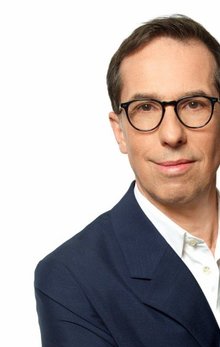
“At L’Oréal, we are committed to dual excellence, combining economic performance with positive social and environmental exemplarity,” say Nicolas Hieronimus, Chief Executive Officer and Ezgi Barcenas, Chief Corporate Responsibility Officer.
“Our purpose — to create the beauty that moves the world — aligns our business strategy and our values with the needs of the world and our communities. Our L’Oréal for the Future program, launched in 2020, embodies this deep commitment.”
Strategy: more than skin deep
The company has advanced sustainability as a core business driver, investing €150m (US$176.2m) in environmental and social initiatives and pushing sustainability targets into every nook of operations – from laboratories to logistics.
Product innovation at L’Oréal means finding new ways to label, assess and communicate the climate and biodiversity impact of everything on the shelf, giving customers real information in real time.
L’Oréal’s European production sites hit 100% renewable energy in early 2025, while the group’s factories and distribution centres globally are racing towards carbon neutrality – driven by robust internal audits as much as external demand. Despite missing some sustainable packaging goals, the company has been open about the obstacles and re-committed to deeper systems redesign.
Goals and targets
By 2025, L’Oréal aims to halve the greenhouse gas emissions per finished product, with a simultaneous 50% cut in water use and waste across the portfolio. Its packaging commitments – to make all plastic containers refillable, reusable or recyclable, and push for at least 50% recycled or biobased content – remain a key focus of the environmental roadmap.
Targets for 2030 tilt towards net zero, not only in direct operations but across the entire value chain, from suppliers and transport to consumer use. Social inclusion is woven in at ground level, helping 100,000 disadvantaged people into employment and supporting millions more via empowerment initiatives.

One standout area is sustainable sourcing – by 2025, 90% of ingredients must be renewable or derived from recycled material, with a commitment to regenerate more land than L'Oréal’s own footprint.
Every metric is illustrated with annual reporting and third-party audits; the company’s transparency on misses as well as hits keeps the conversation grounded.
Leading sustainability rankings
L’Oréal’s performance is more than a claims game. Its efforts have earned repeated top-tier ratings – a Platinum from EcoVadis, CDP’s “Triple A” for climate, forests and water, and for 2025, a prominent position on Sustainability Magazine’s Top 250 List.
This ranking is not just a badge, but a signifier of deep progress in decarbonisation, circularity and social engagement, as evaluated alongside hundreds of peer organisations.
In pushing sustainability beyond skin-deep branding, L’Oréal is showing how patience, transparency and persistence can change the game for both business and the planet.
Company portals

Executives
Ezgi Barcenas
Chief Corporate Responsibility Officer
Nicolas Hieronimus
CEO