M&S: Transforming Food With Vertically Farmed Salad Leaves
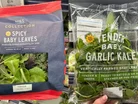
British retailer Marks & Spencer (M&S) is launching three vertically farmed salad products in its Food stores.
This forms part of the company’s ongoing journey to discover innovative ways to produce new food with a smaller environmental footprint.
The salad leaves have been grown using advanced robotics, which use less water and fertiliser than traditional farming methods.

About the salad leaves
M&S’s salads are grown indoors using vertical farming, with advanced robotics planting seeds and UV lights maintaining the perfect conditions for growth.
This approach aims to enhance product quality and customer convenience, as the salads do not require washing before consumption.
It also supports more sustainable agriculture, using 96% less water than conventional practices and eliminating the need for pesticides.
M&S is producing three varieties of salad leaves: Citrus Sorrel Baby Leaves, Spicy Baby Leaves and Baby Garlic Kale, which are unique to M&S Food stores.
The leaves are picked at the optimal moment for quality and flavour and packed within 60 seconds of harvest.
This means that the salads can stay fresher for longer, helping customers’ food last longer and reducing household waste.
Daniele Benatoff, Co-Founder and CEO of Planet Farms, says: “Today marks a major milestone for Planet Farms and for the future of fresh produce in the UK and Ireland.
“After years of close collaboration and joint development with M&S, we are incredibly proud to launch four M&S own-label products nationwide and deliver the UK’s first own-label vertically farmed salad range.
“This achievement reflects the uncompromising approach to quality and innovation and the passion for exceptional produce that brought Planet Farms and M&S together in the first place.
“We are excited to bring these new products to customers across the country.”
What is vertical farming?
Vertical farming uses vertically stacked layers for growing crops, instead of traditional horizontal fields.
With this method, farmers can produce a greater volume of food on the same area of land by growing crops in warehouses or greenhouses.
The process integrates techniques, including artificial control of temperature, humidity and light, maintaining a delicate balance to ensure optimal growing conditions.
The benefits of a vertical farming system include consistent year-round production, crop growth in urban areas, and reduced need for water and land.
M&S’s salad leaves are grown with a growing substrate instead of soil, helping to provide the exact nutrients needed to grow the perfect crops.
M&S: sustainable food production
The vertical farming products align with M&S’s Plan A for Farming.
This is a five-year commitment launched to help deliver a more sustainable future for food.
M&S is working with farmers to adopt regenerative farming practices that can improve soil health and biodiversity.
This programme involves planting cover crops and herbal leys, reducing tillage and establishing new hedgerows and trees.
Andrew Clappen, Director of Technical for M&S Food, says: “The future of food is about finding new and innovative methods which put less pressure on the environment while delivering the best in market flavour and quality.
“These Collection salads are vertically grown exclusively for M&S and bring new flavours to our customers with a dramatically reduced water consumption – supporting our Plan A goal to reach net zero by 2040 across our supply chain.”