The Sustainability Benefits Behind Maersk's Return to Suez
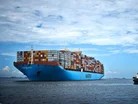
After the successful transits of Maersk Sebarok and Maersk Denver through the Suez Canal, Maersk has confirmed plans to resume its services along the trans-Suez route.
Its MECL service, which connects the Middle East and India with the US East Coast, is best aligned with this route for both speed and efficiency. The shift marks a move toward faster, more cost-effective, and more sustainable shipping operations.
Efficient logistics
The Suez Canal has long served as the quickest maritime link between Europe and Asia, previously handling around 10% of global seaborne trade before the Houthi attacks and ongoing conflict disrupted traffic in 2023. The instability forced logistics operators to seek alternative routes to avoid risk, leading to longer transit times and higher transport costs as vessels diverted around Africa instead of passing through the Red Sea.

With conditions in the region showing signs of stability, Maersk is now ready to restore services along this critical passage, promising a significant improvement in transit efficiency. The company first tested the route with the Maersk Sebarok and Maersk Denver before committing to permanently return its MECL service to the canal. This marks the first major service realignment back to the original pattern, enabling customers to benefit from faster shipping and potential cost reductions.
"The return to the Suez Canal should ease freight rates," said Germany's chemical industry association, VCI.
Maersk will continue to monitor the security situation in the region closely. If volatility increases or conditions deteriorate, the company plans to revert to the Cape of Good Hope routing to maintain operational safety and stability.
Sustainability in focus
The trans-Suez corridor remains the preferred route for most logistics companies, and Maersk has been intent on re-establishing its presence in the Red Sea since conflict first disrupted global trade. Serving as a crucial link between East and West, the Suez Canal ensures optimal efficiency across shipping networks.
The route passing through the Suez, Red Sea, and Bab el-Mandeb Strait provides the quickest passage between Asia and Europe, making it not only more efficient but also the most sustainable option for international trade by reducing both distance and emissions. Prior to the disruptions, about 3.5 million tonnes of cargo passed through the Suez each day; following the Houthi attacks, that figure dropped nearly 60% to around 1.25 million tonnes.
Shipping from Singapore to Rotterdam via the canal takes roughly 26 days across 8,500 nautical miles. In contrast, the detour around Africa extends the journey to 36 days and 11,800 nautical miles—substantially increasing fuel use and emissions. Returning to the Suez Canal, therefore, supports Maersk’s decarbonisation goals and those of its clients by helping to reduce environmental impacts across the supply chain.
All sustainability, net zero, Scope 3 and sustainable supply chain leaders should attend:
- Sustainability LIVE: The Net Zero Summit - QEII Centre, London, March 4-5
- Sustainability LIVE: The US Summit - Navy Pier, Chicago, April 21-22
Co-located with Procurement & Supply Chain LIVE, these events brings together CSOs, ESG leaders and senior decision-makers at a moment when sustainability, supply chains and commercial performance are increasingly interconnected.
Tickets can be booked online today for The Net Zero Summit and The US Summit. Group discounts available.
Avoiding disruption
Maersk’s return to the Suez is driven by its strategic collaboration with the Suez Canal Authority, both parties working to strengthen safe, efficient global logistics. While this is a positive step forward, some disruption is expected as routes shift and networks rebalance.
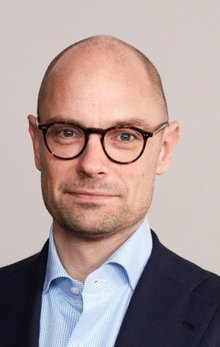
"There is no doubt that there will be added volatility to supply chains once container liners begin the shift back to East-West transits through the Red Sea, just as we saw when the industry started sailing via the Cape of Good Hope," cautioned Johan Sigsgaard, Chief Product Officer for Ocean at Maersk.
"While this shift can be planned to a certain extent, changes of this size introduce considerable disruption to the networks and the scale of the impact will depend on how fast the transition will happen."
The shorter transit times could initially lead to port congestion and stock imbalances, but Maersk is proactively collaborating across its network to mitigate such issues. Leveraging the flexibility of its Gemini network, the company can dynamically reroute vessels and adjust scheduling to ensure agile, resilient operations and minimise future disruption.
Company portals

Executives
Johan Sigsgaard
EVP, Chief Product Officer - Ocean