Maritime Transport: Zero Emission eHGVs Powering Logistics
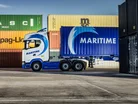
VEV has completed charging infrastructure installation across three UK logistics sites as part of Maritime Transport's transition to electric heavy goods vehicles (eHGVs). The infrastructure deployment is among the largest of its type in the UK for freight operations.
The company installed five megawatts of high power capacity for Maritime Transport, which has begun operating electric heavy goods vehicles across its network. According to VEV, 19 Maritime Transport eHGVs have entered service, with 56 vehicles planned for introduction across 13 transport depots and rail-connected terminals during 2026.

Charging capacity across three sites
VEV installed 18 high-powered DC chargers across depots in Wakefield, Tilbury and Doncaster. Individual unit capacities range from 100 KW to 400 KW.
The system has been designed to support up to 36 electric trucks charging simultaneously. VEV was responsible for design and delivery of the infrastructure.
This included site layout, power systems engineering, civil works, charger installation and integration with its smart charging and energy management platform. The project forms part of Maritime's eHGV rollout under its Maritime Zero division, an initiative designed to accelerate fleet electrification at scale and build what the company describes as a commercially viable pathway to zero emission freight.
Marcelo Soares, VP Customers and Partnerships at VEV, says: "Heavy freight is one of the most difficult sectors to decarbonise due to the scale of power required and the operational intensity of fleets.
"Delivering 5 MW of charging capacity across live logistics depots shows that electric HGV infrastructure can now be deployed at a meaningful scale in the UK. This is not a pilot. It is real operational infrastructure."
Green electricity for freight operations
Once fully operational, 56 eHGVs will be powered by green electricity. Each vehicle is expected to travel approximately 120,000 km per year.
The first phase commenced at Maritime's transport depot in Wakefield where nine Mercedes-Benz eActros 600 vehicles arrived in January 2026. Maritime will bring in 18 eHGVs and charging points across Wakefield, Doncaster iPort and London Distribution Park in Tilbury.
The rollout expanded to the Midlands in March, with four Volvo Aero and six DAF XF eHGVs entering service at Birmingham Rail Freight Terminal through Electric Freightway. A further 18 vehicles will follow, led by Voltempo, a market leader in heavy goods vehicle electric vehicle fleet charging depots.
The rollout forms part of the government-backed Zero Emission HGV and Infrastructure Demonstrator programme, funded by the Department for Transport and delivered in partnership with Innovate UK. Tom Williams, Deputy CEO at Maritime Transport, says: "We've got big ambitions on electrification, and this is a massive step forward from the pilot phase into operational reality within our network.
"The infrastructure now in place gives us the capacity and confidence to expand our electric fleet as part of our long-term strategy to run the cleanest full load supply chain in the UK."
Sustainability leaders won’t want to miss Sustainability LIVE: The Leadership Summit at London Climate Action Week, taking place at Code Node on 25 June 2026.
Register now for this exclusive invite-only event.
Economic case for fleet decarbonisation
According to McKinsey, fleet decarbonisation makes compelling economic sense. The consultancy cites battery electric vehicles' total cost of ownership as well as incentives to companies that are offered by some governments.
McKinsey also says that companies will need to overcome operational and strategic hurdles to make the switch. The infrastructure required to power eHGVs is a key hurdle.
Better access to the infrastructure needed to charge fleets is essential in the ongoing implementation of this technology. The programme delivered by Maritime Transport and VEV forms part of a wider rollout of electrifying fleets.
Barclays, AstraZeneca and Amazon have all begun similar processes. The expansion of charging infrastructure at commercial scale could mean that zero emission freight operations become more viable across the UK logistics sector.
Company portals


Executives
Marcelo Cabral Soares
Chief Business Officer - E-mobility

Tom Williams
Deputy CEO