Mars: Sustainable Rice Farming for Future Resilience
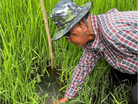
In partnership with rice producers, Mars is helping to implement sustainable farming practices that reduce environmental impact while strengthening supply chain resilience.
"We're firmly committed not just to targets in a distant future but to delivering progress now. In order to do this, societal impact goals have to be built into business decision making," Alastair Child, Mars Chief Sustainability Officer, says.
"And to continue to deliver progress consistently, we need systemic change across our supply chains, with governments, industry and farmers all playing a role. We know we can't do this alone and so we want to bring our partners and peers along, as only large-scale change will deliver on our collective goals."
The global rice challenge
This kind of initiative is vital for a leader in the food-related sectors like Mars because of the integral role rice plays in the world's diet and economic sustainability.
As well as being a daily staple for 3.5 billion people globally, it helps provide income to around 19% of the world's population.
However, traditional rice production utilises approximately 40% of the world's irrigation water and accounts for up to 10% of global methane emissions.

Mars owns one of the world's biggest rice brands, Ben's Original, making rice a critical raw material for their food and nutrition segment, underscoring the responsibility to engage in more sustainable sourcing practices.
Thailand: a climate smart success story
With the urgent challenge of climate change, additional pressures are being placed on food crops. In Thailand, rice is the most significant food crop, occupying around half of the nation's agricultural land. Farmers in the country face immense vulnerability due to climate shifts as yields heavily rely on weather patterns.
The drought in 2019 starkly illustrated this vulnerability, with yields during the second growing season plunging by 54%, causing a one-third drop in exports. Projections of temperature increases up to 2°C by 2059 threaten to cut rice yields by 17-20% without changes to current farming methods.
Through targeted efforts, the food and nutrition sector is making strides towards sustainable rice farming by reducing irrigation demands, lowering greenhouse gas emissions, and supporting farmers in achieving or surpassing their yield goals.
In 2018, Mars, in collaboration with the German agency for international cooperation GIZ and other partners, initiated the Sustainable Aromatic Rice Initiative in Thailand. This programme aimed to equip farmers with training on Sustainable Rice Platform (SRP) standards, integrating digital farming solutions, robust record-keeping, efficient water management like alternate wetting and drying, and optimal use of farming inputs.
The programme, spanning six years, successfully remolded the practices of 1,450 farmers across Roi Et and Central Plain provinces in Thailand, with women making up 70% of the participants. These farmers were taught sustainable rice cultivation methods aligned with SRP standards.
For rice farmer Jularak, the programme notably increased her yields and improved her family's income. She notes, "My dream is to inspire more women to follow in my footsteps and contribute to the agriculture sector. With the income from increasing yields, I can support my children with better health and education. I encourage them to embrace rice farming and secure a prosperous future for themselves."
Jularak is one of many beneficiaries. The initiative, which concluded in June 2024, has demonstrated tangible results for the 1,450 participating farmers, who have experienced:
Increased Rice Production: 43% in Roi Et & 10% in Central Plain
Water Reduction: 56% in Roi Et & 41% in Central Plain
The success of this program has paved the way for its expansion throughout the Thai rice sector.