Mercedes F1’s EV Trucks For Sustainable Logistics in Monaco
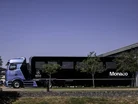
The Mercedes-AMG PETRONAS F1 Team is deploying the all-electric Mercedes-Benz Trucks eActros 600 to the nine European races in this year's Formula 1 Championship.
The eActros 600 is set to join the fleet of HVO100-powered race and marketing trucks, transporting race trailers.

Electric vehicles in Europe
The eActros is expected to cover approximately 15,000km across the next three months, in line with the European leg of the season culminating in Madrid in mid-September.
Mercedes' plans build on its successful runs during the 2025 season, including its initial pilot run at the British Grand Prix.
Marking an industry first, in the 2025 season Mercedes' W16 race cars were transported from the team's base in Brackley, Northamptonshire, to Zandvoort for the Dutch Grand Prix, all powered by electricity.
By extending the use of the eActros 600 across all nine European races, Mercedes demonstrates growing confidence in the reliability of long-haul electric technology.
“We are realising our ambition of deploying the Mercedes-Benz Trucks eActros 600 across all nine European races, demonstrating our commitment to accelerating decarbonisation in some of the hardest-to-abate areas of our operations,” says Alice Ashpitel, Head of Sustainability, Mercedes-AMG PETRONAS F1 Team.
“As a team, we are committed to engineering change on and off the track and it’s exciting to see how quickly we have moved from pilot journeys to a full rollout.”
Reducing logistics’ carbon footprint
The Mercedes-Benz Trucks eActros 600, which successfully completed its first journey from Brackley to Monaco last weekend, covering more than 1600km, is responsible for transporting key operational infrastructure, including the communications office, doctor and physio rooms.
As a global sport, logistics remains one of the most challenging areas for the Mercedes-AMG PETRONAS F1 Team to decarbonise.
By expanding the use of the Mercedes-Benz Trucks eActros 600, the Mercedes portfolio of lower-emission alternatives to conventional diesel-powered drivetrains is increased.
Low-emission vehicles are helping the Team’s long-term Scope 3 emissions reduction and supporting its target to achieve Race Team Net Zero by 2030.
Sustainability leaders won’t want to miss Sustainability LIVE: The Leadership Summit at London Climate Action Week, taking place at Code Node on 25 June 2026.
Register now for this exclusive invite-only event.
This initiative is an integral part of the Mercedes-AMG PETRONAS F1 Team’s broader sustainable logistics programme, including the industry-leading rollout of HVO100 biofuel, supported by our Title and Technical Partner, PETRONAS.
"We are proud to be pushing the boundaries of what’s possible in Formula One logistics once again,” says Ash Armstrong, eConsultancy Manager, Daimler Truck UK.
“With the eActros 600 supporting the Mercedes-AMG PETRONAS F1 Team at all nine European races this season, this project is a powerful demonstration that long-haul electric transport is not a future ambition, it's a reality today.
“Building on the success of last year’s programme, this collaboration showcases both the capabilities of the eActros 600 and the rapid evolution of Europe’s charging infrastructure.
“It’s further evidence of how Mercedes-Benz Trucks is helping to redefine sustainable transport, not only in the demanding world of Formula One, but across the logistics industry as a whole."
In 2025, the Team achieved 99% coverage of HVO100 across races and marketing trucks for the European season, which saved more than 410 tonnes of CO₂-equivalent.
Sustainable supply chains
The Mercedes-AMG PETRONAS F1 Team is demonstrating how sustainability can be embedded across complex global supply chains through a combination of emissions reduction, carbon removal investments and supplier engagement.
By expanding its portfolio of high-integrity carbon removal projects across multiple countries and technologies, the team is addressing residual emissions while prioritising direct reductions in areas such as logistics, energy use and transportation.
A key aspect of its strategy is tackling Scope 3 emissions, which originate across the supply chain and often account for the largest share of an organisation's carbon footprint.
Through initiatives such as supplier sustainability events, a strengthened Supplier Code of Conduct and supply chain risk screening tools, the team is encouraging greater environmental accountability among its partners.
Combined with the adoption of sustainable fuels, low-carbon logistics solutions and collaboration with industry stakeholders, this integrated approach highlights how organisations can drive sustainability improvements throughout their value chains while supporting broader climate goals.
Company portals


Executives
Alice Ashpitel
Head of Sustainability

Ash Armstrong
eConsultancy Manager