
Microsoft Data Centres: Built for Water & Energy Efficiency
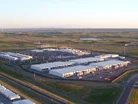
Microsoft commits to water replenishment and carbon-free energy as it plans 3,200-acre data centre expansion in Wyoming to meet surging cloud and AI infrastructure demands.
Microsoft plans to acquire approximately 3,200 acres in Cheyenne, Wyoming as part of a multiyear data centre expansion. The development centres on environmental sustainability measures including water replenishment initiatives and carbon-free electricity procurement.
The land acquisition spans two sites. One parcel covers 200 acres within Bison Business Park. A second spans 3,000 acres in southeast Cheyenne. Both require public consultation and regulatory approval before construction begins.
The expansion responds to surging demand for hyperscale data centre capacity driven by cloud computing and AI workloads. Industry analysts project global data centre capacity will need to double by 2030 to accommodate AI training models and enterprise cloud migration. Microsoft's Wyoming investment forms part of a broader infrastructure buildout across North America as the company positions itself to serve these growing computational requirements.
According to Microsoft, the company has operated data centres in Wyoming for more than 14 years. Noelle Walsh, President of Cloud Operations and Innovation at Microsoft, says the expansion reflects a commitment to environmental stewardship alongside infrastructure growth.
"Our CO+I teams who design, build and operate our data centres focus not only on scale and reliability, but on showing up as long-term, trusted partners in the communities where we operate," Noelle says. "We recognise that growth at this scale requires us to invest in the infrastructure that supports not just our operations, but the broader community. That means paying for road improvements, stormwater systems and utility upgrades that benefit everyone in Cheyenne."
Noelle adds that Microsoft's approach involves multiyear planning cycles that integrate environmental impact assessments and community feedback before construction begins. This planning process typically spans three to five years from initial site selection through regulatory approval and design finalisation.
Water replenishment targets river basins
Microsoft states it will restore more water to regional watersheds than its Cheyenne facilities consume. The company has committed to water replenishment projects across the Mississippi-Missouri and Colorado River basins.
Projects in Cheyenne could return approximately 566 million gallons through partnerships with environmental organisations. This approach aims to offset consumption linked to cooling operations at the data centres.
Existing facilities in Cheyenne use direct evaporative cooling systems. According to Microsoft, this method requires water for fewer than 10% of annual operating hours.
Newer designs reduce water dependency further. Some facility configurations eliminate the need for continuous water access after initial system fill. This could show a shift towards dry cooling technologies in arid regions where water scarcity presents long-term operational risks.
The water replenishment strategy positions Microsoft alongside other hyperscale operators implementing watershed restoration programmes. Google, Amazon Web Services and Meta have announced similar initiatives as the industry responds to scrutiny over data centre resource consumption in water-stressed regions.
Carbon-free electricity sourcing arrangements
Energy procurement forms a central element of the sustainability strategy. Microsoft confirms it will source carbon-free electricity to match consumption at the expanded facilities.
The company will work within the Western Electricity Coordinating Council region to secure renewable energy supplies. This aligns with commitments to reduce carbon intensity across its data centre portfolio.
Black Hills Energy will supply electricity under the Large Power Contract Service tariff. Microsoft will fund the full cost of infrastructure upgrades required for its operations.
Wes Ashton, Vice President of Utilities in Wyoming and South Dakota at Black Hills Energy, says: "That partnership supports economic growth in Wyoming and our flexible and innovative tariff provisions allow us to meet Microsoft's expanding energy needs while protecting base retail customers from rate impacts."
The carbon-free electricity commitment responds to broader industry pressure to decarbonise operations as AI workloads drive unprecedented energy demand. Data centres now account for approximately 2% of global electricity consumption, with projections suggesting this could reach 4% by 2030 as generative AI applications scale.
Infrastructure investment includes public systems
Microsoft commits more than US$68m to off-site infrastructure improvements in Cheyenne. These include road upgrades, stormwater management systems, pump stations and municipal water enhancements.
The infrastructure supports data centre operations but also integrates with public systems used by residents. Stormwater systems could reduce flooding risks in surrounding areas.
Municipal water upgrades may improve service reliability for households and businesses. Road improvements will accommodate construction traffic during the build phase.
The company states it will fund these improvements directly rather than passing costs to local ratepayers. This structure aims to minimise financial impact on existing utility customers.

Noelle emphasises that infrastructure investment represents a core component of Microsoft's community partnership model. "We don't view these as costs to be minimised but as investments in the long-term sustainability of the regions where we operate," she says. "When we build roads or upgrade water systems, those improvements serve the community for decades beyond our immediate operational needs."
Workforce training supports transition roles
The expansion could create demand for thousands of construction workers during the build phase. According to Microsoft, roles will include electricians, pipefitters, carpenters and steelworkers.
Permanent operations could generate hundreds of jobs in IT, security and facility management. Microsoft continues its Datacenter Academy partnership with Laramie County Community College.
The programme has trained more than 1,000 students since 2019. Curriculum focuses on skills required for data centre operations and maintenance roles.
The workforce development initiative addresses industry-wide skills shortages as hyperscale operators compete for qualified technicians. Training programmes help build local talent pipelines while reducing reliance on imported labour during construction phases.
Mayor Patrick Collins says: "This is the latest in a long line of investments that Microsoft has brought to the city of Cheyenne as a member of our community since 2012."
Collins describes the expansion as supporting long-term economic stability for the region. According to the city, Microsoft's data centres contributed more than US$11m to the local tax base in 2025.
Tax revenue supports public services including schools, hospitals and libraries. The expanded facilities could increase contributions over the next decade as construction phases complete.
The Cheyenne expansion demonstrates how hyperscale operators balance growth imperatives with environmental accountability. As AI and cloud workloads drive infrastructure demand, sustainability measures become competitive differentiators in an industry facing increasing regulatory scrutiny over resource consumption and carbon emissions.
Company portals


Executives

Noelle Walsh
President, Microsoft Cloud Operations + Innovation

Wes Ashton
Vice President of South Dakota & Wyoming Utilities