
Microsoft: How Gen AI can Clear Clean Energy Permits
The process of securing permits for renewable energy projects can be lengthy and resource-intensive.
In an effort to address this, Microsoft has been exploring technological avenues to streamline this procedure.
The idea started during one of Microsoft's 'hackathons' – interactive events where software developers collaborate intensively to enhance software products.

Now the technology company is investing its time and resources into revolutionising Gen AI.
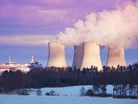
It is focusing on nuclear power, an expensive energy source that planning and permitting is known for taking decades.
Microsoft said in a statement "Permitting is the single biggest bottleneck to deploying clean energy fast enough to avoid runaway climate change.
"That's not just inefficient – it's existential."
Why is permitting a problem?
The project started in 2022 at a gathering of the Repowering Coal Consortium at Microsoft's Dublin office.
More than 50 industry representatives from the nuclear sector identified permitting as an essential hurdle for scaling nuclear projects.
Mark Tipping, Global Offshore Power to X Director at Lloyd's Register, says: "Together, we're tackling one of the biggest challenges in deploying nuclear technology, which is navigating complex, slow and costly licensing processes."
How did the initiative take off?
Initially, the team tackled the permitting issue using conventional software methods, but could not overcome the problem.
Conor Kelly, a key team member, explains: "We first started trying without Gen AI... just normal software programming. It was an intractable problem."
Progress was made when the team discovered that generative AI could curate massive and diverse datasets, generating content to fit various licensing document formats precisely.
Through integrating Azure OpenAI and Kernel Memory, the system now drafts initial versions of permitting documents within five minutes, a process that traditionally spanned several months or even years.
What is Microsoft's three-pronged approach?
The solution targets three main challenges within the permitting domain.
Gen AI is used for automated document drafting, leveraging historical and project-specific data points.
A Copilot system enables permitting professionals to access regulatory datasets swiftly via ad-hoc queries, operating entirely on companies' Azure tenants to safeguard data integrity.
Pre-submission review mechanisms identify any missing information pre-emptively, avoiding costly regulatory delays.
Measureable impact
The project has delivered real results, creating productivity gains in permitting workflows by 25-75% across various energy sector companies.
Ed Essey, Senior Director of Business Value at Microsoft, says: "It's incredible to see that what began as a side project got Microsoft into nuclear."
The initiative has generated a cross-Microsoft task force on AI for permitting, backed by senior executives such as Chief Sustainability Officer Melanie Nakagawa and President Brad Smith.
How else will the team impact sustainability aims?
Originally centred on nuclear permitting, the scope of the project has since expanded into renewables, mining, and other sectors within clean energy.
The team operates under Microsoft's MCAPS Energy & Resources division, pioneering new applications for mining and offshore wind projects.
"This project was about realising much wider applicability – not just this specific nuclear permitting document, but right across the nuclear permitting field and into wind and other renewable energy permitting," Connor says.
The team is collaborating with regulators with the aim to the produce faster industry permitting, without overwhelming the public sector capacity.
