
Inside Mission Zero's Deep Sky Canadian Carbon Removals
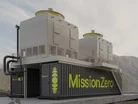
Direct air capture (DAC) is technology that separates carbon dioxide from the air through a chemical or physical process.
DAC was created to help reach the global aim set out in the Paris Agreement of a maximum 1.5°C climate increase, making an impact where reductions are slow or not possible.
Mission Zero has collaborated for the third time with Deep Sky and switched on its third DAC system in Alberta, Canada.
The technology is part of Deep Sky’s carbon removal innovation and commercialisation centre, Deep Sky Alpha.
"This represents an important step for the wider DAC industry, as Deep Sky is beginning to operate multiple technologies at its DAC hub in Canada," says Alex Petre, CEO at Deep Sky.
"We are excited to have Mission Zero be one of the first technologies live at Alpha this summer."
What is Mission Zero’s technology?
Mission Zero aims to own the world's most efficient DAC technology, using a plug and play electrochemical solution that can recover historic CO₂ emissions anywhere with access to electricity.
The technology locks the carbon in rocks underground, using atmospheric carbon for building materials creating urban sinks, as well as creating sustainable fuels from air rather than oil.
Mission Zero says that it partners with pioneering CO₂ users, project developers, engineers and scientists globally to turn historic carbon waste into new climate value.
The development of the project focuses on a modular platform harnessing existing mature technologies and supply chains.
To support green skills and local economies, the company says that the systems strategically source components from different suppliers, supporting local economies and suppliers without impacting cost, performance and speed to the market.
Nicholas Chadwick, CEO at Mission Zero Technologies, says: “This will be Mission Zero’s third installation – providing more proof that a modular design, using proven components and established supply chains, is the best approach for delivering impactful climate technologies at pace.”
Carbon removal in Canada
The electrochemical DAC system is the first of its kind and is operated by Deep Sky, the Canadian carbon removal project developer.
The technology is powered by renewable solar energy, with the aim to recover up to 250 tonnes of CO₂ annually and store it permanently underground.
Deep Sky Alpha has been created with the goals of accelerating DAC and carbon removal to support the global fight against the climate crisis.

Nichol says: “Deep Sky Alpha, as a project validating some of the best startups in the DAC industry, is a vital milestone for the carbon removal industry.
“It will show that DAC tech, when done effectively, is commercially viable and an essential tool in our fight against the climate crisis."
How will the technology enable expansion?
This project will be the first to operate in sub zero temperatures and Mission Zero says this will further grow its database of real-world performance data.
By enriching the performance data, Mission Zero will have tools to ensure greater financial confidence and faster technological optimisation.
Using the data from previous projects can prove to be highly beneficial, with Mission Zero having more than a 60% reduction in the cost of the system compared to the first deployment in 2023.
Nicholas says: “I am proud to prove a third commercial use case for our direct air capture technology on a new continent.
"This third deployment demonstrates that we’ve established an exportable model for scaling internationally and is a testament to our combined teams’ ability to deliver critical climate solutions at pace."