Nespresso: The World’s First Certified Regenerative Coffee
The global coffee market is projected to generate more than US$485bn in revenue in 2025, according to Statista.
Despite it being one of the most traded beverages, small-scale coffee producers struggle with climate change risks and unpredictable prices.
Companies like Nespresso aim to support coffee farmers in implementing sustainable practices while offering financial incentives to improve their livelihoods.

Climate change in coffee production
Climate change poses many risks to the agricultural industry, especially in coffee production.
Rising global temperatures are responsible for unpredictable weather events and the spread of pests and diseases.
According to the Food and Agriculture Organisation of the United Nations, 33% of the Earth’s soils are already degraded and more than 90% are likely to become degraded by 2050.
However, regenerative agriculture offers an opportunity to restore Earth’s natural functions and improve the livelihood of farmers.
A thriving ecosystem allows high quality coffee to grow and be protected for future generations thanks to healthy soil, clean water and shade from nearby trees.
Nespresso and the Rainforest Alliance’s partnership
Nespresso has had a partnership with the Rainforest Alliance for more than 20 years.
In 2003, the two companies partnered to develop the AAA Sustainable Quality Programme that helps farmers by giving them technical support from a network of agronomists and providing a premium for their harvest.
It aims to support farmers in cultivating high quality coffee, boosting their yields and building resilience in their crops.
The AAA programme has been present as a long-standing collaboration with farmers and other partners along the supply chain and promotes the adoption of sustainable agricultural practices.
It improves the productivity and quality of harvests and nurtures biodiversity through techniques such as reducing pesticides and planting shade trees.
Nespresso sources more than 40% of its coffee from Rainforest Alliance Certified farms and 95% from AAA farms.
The Regenerative Agriculture Standard
The Rainforest Alliance has launched its Regenerative Agriculture Standard for farms that meet a set of sustainable farming requirements.
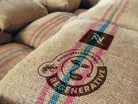
Nespresso will become the first brand to source certified regenerative coffee, with farms in Costa Rica and Mexico receiving certification from the Rainforest Alliance.
Nespresso’s coffee products will bear a regenerative certification seal, beginning in 2026.
Jérôme Perez, Head of Sustainability at Nespresso, says: “We’re proud to be the first brand to source Rainforest Alliance Certified Regenerative coffee.
“It’s a symbol of our commitment to building balanced, resilient yet productive landscapes within our supply chain, which is essential if we’re to protect the future of the world’s quality coffees and the communities which depend on them.
“I hope this consumer-facing seal will encourage other brands to support coffee farmers in a wide-scale regenerative transition, while also enabling consumers to become more aware of the benefits of purchasing products sourced from farms that have implemented regenerative agriculture practices.”
The history between the two organisations will fuel their partnership going forward as the Regenerative Agriculture Standard supports more brands.
The Rainforest Alliance has worked alongside farmers, partners and experts to advance sustainable agriculture and to develop its certification seal.
Santiago Gowland, Chief Executive Officer at the Rainforest Alliance, says: “Rooted in four decades of experience in sustainable agriculture, our new Regenerative Agriculture Standard combines scientific rigour with proven regenerative practices tailored to specific crops and regions.
“Our goal is to accelerate the transition to a new model of agriculture - one that helps protect, restore and regenerate the ecosystems on which we all depend.
“The new seal will help consumers support this transition by identifying certified products from farms adopting regenerative methods.
“For farmers, it offers recognised external validation for their efforts, greater market access, and enhanced value for their coffee - while supporting a more resilient future for both people and nature.”
Company portals

Executives
Jérôme Perez
Global Head of Sustainability
Santiago Gowland
Chief Executive Officer at the Rainforest Alliance