
Net Zero, Biodiversity & Packaging: Asahi’s Global Impact
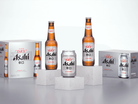
Asahi Group was founded in Japan in 1889 and has grown into a global leader in alcoholic beverages, with popular brands including Asahi, Peroni and Kozel.
At the core of the company’s sustainability strategy are targets to address climate change and promote resource efficiency.
Sustainability Magazine has ranked Asahi 64th in its Top 250 World’s Most Sustainable Companies 2025.

Asahi Carbon Zero: net zero goals
Climate change poses a significant business risk that the company cannot afford to overlook.
Asahi’s Carbon Zero plan is the company’s answer. It details the firm's plan to achieve net zero greenhouse gas emissions by 2040.
Asahi has set short-term goals to reduce Scope 1 and 2 emissions by 70% and reduce Scope 3 emissions by 30% by 2030, compared to 2019 levels, focussing on implementing renewable energy and promoting decarbonisation in fuel used in the manufacturing process.
It is working on collaborating with its suppliers and partners as it targets greenhouse gas reductions in the value chain.
Asahi also plans to use 100% of electricity from renewable sources in all its operations by 2040, which is 10 years ahead of its initial 2050 target set in 2022.
Drahomira Mandikova, Group Chief Sustainability Officer at Asahi, says: “To ensure delivery on our 2030 and 2040 commitments and carve a deserved long-term place in society, Asahi Group leadership is determined to accelerate innovation and co-creation by identifying and investing in sustainable practices, while also future-proofing our business and building trust by strengthening relationships with all stakeholders.”
Avoiding plastic packaging
Since 1950, more than 8.3 billion tons of PET bottles and other plastics have been produced worldwide, with 6.3 billion tons going to waste, according to the Japanese Ministry of the Environment.
With the aim of building a circular economy, Asahi aims to reduce the environmental impact of its packaging.
The company wants to protect and preserve marine biodiversity by minimising resource use to make packaging and encouraging recycling.
Its target is to realise 100% utilisation of materials for plastic containers by 2025 and to achieve a 100% conversion rate to recycled or bio-based materials for PET bottles by 2030.
Asahi aims to promote the development of new sustainable materials, expand its use of recycled materials and sell products without plastic labels.
When developing packaging solutions, Asahi is focused on preserving the quality of the contents and ensuring the packaging is strong and durable enough to effectively transport the products.
Collaboration for sustainable solutions
In 2024, Asahi announced the launch of its Sustainability Growth Platform as part of its sustainability commitments.
Through this platform, it aims to collaborate with startups and scaleups to develop environmental solutions in seven areas:
- Sustainable agriculture and raw materials
- Renewable energy and efficiency
- Sustainable packaging and circular economy
- Water conservation and efficiency
- Sustainable transportation
- Sustainable product design and go-to-market models
- New impact business models
The project takes place with collaboration from Asahi Group and is supported by venture capital firm Antler.
Asahi’s aim for the platform is to help startups build relationships with the Asahi Group and its network of venture capital firms and industry partners.
It will also allow collaborators to access Asahi’s database of expertise, insights and specialised tools to support product development.
Atushi Katsuki, President and Group CEO at Asahi, says: “Looking ahead, many expect current geopolitical risks to grow in complexity and climate change to develop crisis proportions.
“We help create meaningful connections between people, nature, communities and society by delivering on our great taste promise and facilitating fun times and, in so doing, creating a legacy of a brighter world tomorrow.
“Fulfilling this commitment to the future is our way of helping to realise a sustainable society.”
Company portals

Executives

Atsushi Katsuki
President and CEO

Drahomira Mandikova
Chief Sustainability Officer