How Nokia's 5G Solution Will Enhance Sustainable Railways
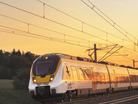
Nokia has introduced a commercial 5G radio solution aimed at advancing sustainable digital railway operations across the globe, setting the stage for the Future Railway Mobile Communication System (FRMCS).
This initiative underscores Nokia's commitment to enhancing rail digitalisation, fostering networks that are smarter, safer and more environmentally responsible, while offering considerable advantages to passengers and operators alike.
Paving the way for future-ready railway communication
The Future Railway Mobile Communication System (FRMCS) is set to replace the outdated 2G Global System for Mobile Communications, Railway (GSM-R) within the coming decade, introducing a global 5G-based protocol for railway communication enforcement.
This 5G evolution promises high reliability and embedded security, enhancing automation, digital services, improved passenger experiences and robust cross-border connectivity.

Nokia's position as a leader in railway communication spans over two decades of GSM-R deployment, has fostered their active role in FRMCS development and standardisation in collaboration with rail operators, governments and industry bodies.
Strategic developments for sustainable railway operations
Tommi Uitto, President of Mobile Networks at Nokia, highlights Nokia’s commitment to railway innovation.
He says: “Our commercial 5G solution reflects Nokia’s long-standing commitment to railway innovation and modernisation.
“As rail operators face increasing demands for digitalisation, high-speed data and enhanced safety, this technology provides the foundation for a new era of rail transport that is efficient, sustainable and passenger-focused.”
Nokia's innovative 5G radio offers the sector's first commercial radio operational in the 1900 MHz (n101) band.
This feat assures strategic coexistence with current GSM-R systems, facilitating a seamless transition to 5G with no operational disruptions.
The technology’s cloud-native 5G standalone (SA) core is designed specifically for railway transport applications, sustaining the complete suite of FRMCS capabilities while remaining modular, scalable, and adaptable for deployments ranging from regional to nationwide.
- Automated train operations: Real-time control and monitoring enhance safety and operational efficiency, reducing energy consumption and emissions
- Passenger information systems: Delivering real-time data enhances the passenger experience and improves service reliability
- Mission-critical voice and data: Integrating voice, video and data services onto a singular platform streamlines network management and operational responsiveness
- Smart rail maintenance: Predictive maintenance enabled by real-time monitoring reduces costly downtime and maintenance overheads
The features collectively contribute to sustainable rail operations and digitised services, illustrating Nokia’s drive to propel the sector toward future-ready infrastructure.
Collaboration and compliance
Nokia’s extensive railway solution integrates its AirScale 5G radio portfolio with a Core Enterprise Solution tailored for rail.
The combination aims to ensure robust cybersecurity, conforming to industry standards and a seamless integration with Nokia's mission-critical IP, optical, and data centre networking products.
The solution is slated for real-world evaluations within the EU-funded FP2-MORANE-2 project, building on previous FRMCS efforts focused on hastening railway digital transformation across Europe.
For telecommunications entities within the rail industry, Nokia’s 5G solution represents a crucial progression towards operational enhancement.
By facilitating an efficient, secure, and scalable transition path from legacy GSM-R to FRMCS, Nokia boosts global rail operators to successfully address the escalating demands for automation, superior passenger services and sustainability in operations.