
What is the Future of EAG Bioenergy in the UK and Ireland?
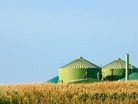
OakNorth has provided a £25m (US$31m) loan to Belfast-based renewable energy firm EAG Bioenergy to support the acquisition of operational biogas and biomethane assets across the UK and Ireland.
The financing will accelerate EAG’s plans to expand its network of bioenergy sites, boosting renewable electricity and biomethane production in a market forecast to grow by 13.7% annually through 2033.
Founded in 2019 by Chris Kerr, EAG focuses on acquiring and managing operational bioenergy facilities that produce biogas, biomethane, and biofertiliser. The company is backed by two institutional investors: Vesper Infrastructure Partners, which targets mid-market energy transition opportunities, and OrbeNovo Capital, a private equity firm specialising in decarbonisation across energy and industrial sectors.

All sustainability, net zero and sustainable supply chain leaders should attend:
- Sustainability LIVE: The Net Zero Summit - QEII Centre, London, March 4-5
- Sustainability LIVE: The US Summit - Navy Pier, Chicago, April 21-22
Co-located with Procurement & Supply Chain LIVE, these events brings together CSOs, ESG leaders and senior decision-makers at a moment when sustainability, supply chains and commercial performance are increasingly interconnected.
Tickets can be booked online today for The Net Zero Summit and The US Summit. Group discounts available.
Consolidation in a fragmented biogas market
The loan underscores EAG’s buy-and-build strategy in the UK’s fragmented biogas market, where smaller independent operators continue to provide opportunities for consolidation by larger, well-capitalised players.
Peder Bratt, Partner at OrbeNovo Capital and Director at EAG, describes the transaction as “another important step in executing EAG Bioenergy's buy-and-build strategy across the UK's fragmented biogas market.
“The assets being acquired are high-quality, operational sites with expansion potential that fit squarely within our investment thesis of building a scaled, diversified platform underpinned by long-dated, inflation-linked revenues."
EAG’s operational model revolves around acquiring proven assets rather than developing greenfield projects—an approach that reduces execution risk and allows the company to build scale more efficiently through consolidation.
Biofuels’ growing role in the energy transition
Biogas and biomethane production have been gaining traction in the UK as the government seeks alternatives to natural gas. Unlike intermittent renewables such as wind and solar, biogas plants can provide baseload generation and feed biomethane directly into the national gas grid.
Michael McGregor, Director of Debt Finance at OakNorth, highlights the sector’s growing importance in the UK’s decarbonisation pathway.
“Biogas and biomethane play an increasingly important role in the UK's energy transition, offering a reliable, low-carbon alternative to fossil fuels while supporting the circular economy,” he says. “With the UK biogas and biomethane market forecast to grow significantly, demand for high-quality, well-operated assets is strong.”
Scaling up the sector will require significant investment in infrastructure—such as anaerobic digesters—and reliable feedstocks. In the UK, biogas operators benefit from government support mechanisms like the Renewable Heat Incentive and Contracts for Difference, which provide long-term, inflation-linked revenues attractive to infrastructure investors.
Operational discipline at EAG Bioenergy
EAG’s strategy emphasises operational excellence across existing assets rather than aggressive development activity—a model that appeals to lenders seeking exposure to predictable, revenue-generating businesses rather than construction risk.
This is where OakNorth’s flexible financing proves critical.
“OakNorth’s ability to structure and deliver capital efficiently has been instrumental in enabling EAG Bioenergy to continue expanding its footprint at pace, while maintaining a disciplined approach to risk and value creation,” Bratt explains.
The structure of the facility gives EAG capacity to pursue further acquisitions while maintaining leverage levels in line with the expectations of its institutional investors.
As market consolidation continues, companies with access to institutional equity and flexible debt structures like EAG’s are well positioned to compete for high-quality assets, gaining ground over smaller, independently run biogas operators.
Company portals


Executives
Michael McGregor
Director of Debt Finance
Peder Bratt
Director