
Oatly's Four-Step Strategy to Renewable Energy and Net Zero
The food and drink industry is highly visible in terms of sustainability. It is an area where everyday consumers can directly change their own environmental impact. But the impact only comes if the alternatives are more sustainable.
Oatly, which produces oat-based dairy alternatives, has a four-part plan to reach its renewable energy goals.
Firstly, like many others, the company plans to reduce energy use by becoming more efficient. Secondly, it then wants to reduce steam use.
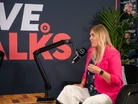
Erin Augustine, Oatly’s Vice President of Global Sustainability, speaking at Sustainability LIVE’s Leadership Summit in June, highlights why the company was exploring its use of steam.

"Look for places where today we might be using steam to heat up or cool down parts of our process and instead use waste heat. Instead, use hot water for things like cleaning,” says Erin Augustine, Oatly’s Vice President of Global Sustainability.
She explains that cleaning usually needs hot water, which often comes from large steam boilers. "Cleaning is hot water. We often generate the hot water with steam. Because we have a big boiler and lots of available steam, we've designed our process to use that steam.
“We need to redesign our process to use less steam."
The third part of the plan focuses on how steam is produced and replacing old equipment with cleaner options, Erin adds. "When the boilers are at the end of their useful life, [we will] not replace them with a natural gas boiler, but replace them with an electric boiler or a biomass boiler."
The final part of the plan will see the company use energy certificates if a site cannot switch to cleaner energy on its own.
Embedding sustainability in products
Oatly makes sustainability central to its business, and this approach helps people see the product as a climate solution. “Maybe it's easier to keep it at the centre because it is part of the value proposition we bring to customers and consumers as a climate solution product," says Erin.
By offering these choices, Erin explains how Oatly brings real value to its customers and retail partners.
"You're avoiding emissions, you're reducing the impact of your consumer footprint, and as a customer, the retailers and the coffee shops and the other customers of our product help them reduce their climate footprint, so for Oatly, sustainability and all of this is truly a business value that we're providing to our customers and consumers,” she says.
"If your product isn't a climate solution, make that a challenge to the innovation team to create a climate solution product so that sustainability is a core value, a business value that you're delivering to your customers and consumers.”
Inspiring change with optimism
Erin draws on her engineering background to understand the daily realities of production and help reduce carbon emissions in food production.
"I'm an environmental engineer by schooling, and at Kellogg, actually one of my favourite experiences in my whole career was being the environment manager at the cereal factory in Battle Creek, Michigan. So on the floor, understanding what it takes to produce healthy, safe, delicious food every day and weave the environmental compliance and sustainability elements into that factory stack of priorities."
This hands-on experience guides her current work at Oatly. Moving to a more sustainable food system is about giving people choices, not pressuring them.
"There are delicious, healthy, nutritious products that are climate solutions and within the planetary health diet guidelines that make it easy to change, and it doesn't have to be full of shame or full of judgment; I think it can be really optimistic about change."
Company portals
Executives
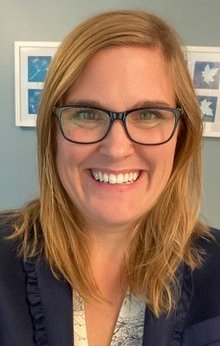
Erin Augustine
Vice President, Global Sustainability