Ørsted: How the First Offshore Wind Farm Changed Renewables
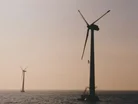
The world’s first offshore wind farm was commissioned in 1991 off the coast of Vindeby, Denmark, a town named for its windy conditions.
After 25 years of useful life and generating 243 GWh of renewable power, it was decommissioned in 2017.
Offshore wind has now reached a global capacity of 83 GW according to the Global Wind Energy Council.
How the world’s first wind farm was built
Offshore, wind speeds tend to be higher and turbines do not need land to occupy.
Offshore wind farms can also have a lower visual impact and create less noise pollution than onshore wind farms.

The Vindeby wind farm was first considered by Elkraft, a predecessor of Ørsted, in 1987 and it began surveying the waters in 1989.
Ørsted’s website says: “At the time, it was a project many considered simply outrageous and a bit mad.”
It contracted Bonus Energy to supply 11 wind turbines modified for offshore use.
LM Wind Power, a subsidiary of GE Vernova, manufactured the 33 blades.
The turbines’ towers were sealed and air conditioning was added to control the humidity inside and extend the machinery’s life.
Bonus Energy was purchased by Siemens in 2004 and is now part of Siemens Gamesa.
Elkraft built the wind farm with SEAS in 11 days with 4.95 MW of nameplate capacity.
What happened to the Vindeby wind farm?
From 3 March to 3 September 2017, the Vindeby farm was dismantled and all of its cables, infrastructure and 33 blades taken back to land according to the decommissioning documents.
The Technical University of Denmark (DTU) received 21 of these blades as donations where they were used to learn how wind turbine blades withstand decades of operation.
Some of these blades were then used to create noise barriers along Danish roads as the fibreglass is high density and able to absorb noise and others were returned to their manufacturer LM Wind Power.
Three of the blades were donated to a company called Miljøskærm that recycles fibreglass and was working on a new method.
The remaining turbines were sent to HJ Hansen for recycling and some electrical components were kept by Connected Wind, the company dismantling the turbines, as spare parts.
Ørsted and Siemens received one gearbox each for research and exhibition.
Even the nearly 60 tonnes of cable used in the Vindeby offshore wind farm were recycled and the reinforced concrete foundations was repurposed as gravel.
One complete turbine was donated to the Energy Museum near Bjerringbro, Denmark.
How offshore wind has developed
Ørsted is building Baltica 2 in Poland which can generate as much power as Vindeby did over its full 25 years in just one month.
Agata Staniewska-Bolesta, Managing Director of Offshore Poland at Ørsted, says: “The development of offshore wind energy is a key element for Poland’s energy transition, which will strengthen the country’s energy security.
“As Poland’s largest-ever renewable energy project, Baltica 2 will lead the way for Poland’s transition to green energy, producing green electricity to meet the needs of approximately 2.5 million Polish households and deliver first power in 2027.”
Modern offshore wind turbines can exceed single-unit capacities of 15 MW with rotor diameters more than double those used at Vindeby and hub highs of more than 100 metres.
The size of wind farms has also grown, with projects like Hornsea 1, 2 and 3 delivering a combined 5.4 GW upon completion and Baltica 2 set to have a capacity of 1.5 GW.
Total global wind capacity grew from less than 7.5 GW in 1997 to more than 1,131 GW by 2024 according to the International Renewable Energy Agency (IRENA).
IRENA’s research says that the levellised cost of offshore wind has dropped by 63% since 2010, in part due to larger turbines, advanced installation methods and scaling economies.