osapiens: Data-Driven Sustainability for Long-Term Growth
The convergence of procurement, supply chain management and environmental responsibility has emerged as a critical area for business resilience in global commerce.
With regulatory demands intensifying and consumer expectations shifting, the connection between data collection and measurable business outcomes has never been more vital.
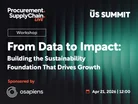
On 21 and 22 April, leading industry figures will convene for Sustainability LIVE: The US Summit. A key feature of this year's programme is the workshop, From Data to Impact: Building the Sustainability Foundation That Drives Growth, held in association with osapiens.
This session aims to transform how organisations approach sustainability as a core driver for long-term commercial success.
Register your interest here.

Innovation and strategy converge
Sustainability LIVE: The US Summit represents a leading destination for senior leaders focused on innovation, strategy and organisational transformation.
This year, the event is co-located with Procurement & Supply Chain LIVE: The US Summit, demonstrating how procurement functions are increasingly central to corporate sustainability objectives.
With more than 1,000 in-person attendees, the two-day summit provides an environment for peer-to-peer learning and executive networking. The programme includes:
- More than 100 expert speakers: Global Chief Procurement Officer and Chief Supply Chain Officer perspectives on industry trends
- 20 targeted content themes: Detailed explorations of AI in procurement, strategic sourcing and supplier relationship management
- Eight executive workshops: Practical sessions designed to deliver immediate ROI for participants
By combining the procurement and sustainability tracks, the summit recognises that contemporary supply chain challenges require integrated solutions.
Transparency and efficiency must work together rather than in isolation.
Building sustainability foundations
Central to this collaborative approach is the workshop in association with osapiens. This session draws on exclusive research conducted in partnership with KPMG in 2024, which surveyed more than 100 senior decision-makers across multiple industries.
The findings offer a benchmark of where organisations currently sit on the sustainability data maturity spectrum.
Many organisations are "data rich but insight poor," finding it difficult to convert complex sustainability metrics into actionable strategies. This workshop is designed to address that challenge.
Participants will take part in an open, collaborative discussion focused on transitioning from intention to measurable impact.
The curriculum is structured around three interconnected pillars that form the foundation of a modern, sustainable supply chain:
- Reporting readiness: Moving beyond manual spreadsheets to automated, audit-ready data structures that meet global regulatory frameworks
- Supply chain visibility: Gaining detailed insights into multi-tier supplier networks to identify risks and opportunities before they impact financial performance
- Product compliance: Ensuring every component of the product lifecycle meets evolving standards, protecting brand reputation and market access
Why attendance matters
For senior procurement and supply chain executives, the challenges cannot be more significant.
Leaders should consider this session because it shifts the focus away from compliance for compliance's sake. Instead, it illustrates how a robust sustainability foundation can directly support growth by optimising operations, reducing waste and building stronger stakeholder trust.
Additionally, the workshop offers a valuable opportunity to exchange perspectives with peers facing comparable challenges. Whether navigating the complexities of AI integration or working to strengthen supplier relationships in an uncertain market, the insights available could provide a roadmap for future strategy.
In an era where impact represents the ultimate measure of success, this workshop aims to equip leaders with the tools to ensure their organisations are not simply participating in the green transition, but driving it forward.