
The Human Element in Sustainable Procurement

In an era of advancing technology within procurement, it is the human workforce that remains a vital component for its future.
While no one can deny the role technology plays, it is the people who harness these tools that drive genuine transformation, developing new methods to create sustainable improvements for business and society.
Amid widespread volatility procurement has evolved to become a catalyst for strategic resilience, either preventing issues at their source or guiding businesses through uncertainty.
Research from The Hackett Group’s 2025 Digital World Class Procurement study shows that leading procurement organisations are navigating this uncertainty by redefining their role and viewing volatility as an opportunity.
It is the people behind the technology who are instrumental in this strategic refocus. While many companies have frozen spending to conserve cash top-performing procurement teams deliver 2.6 times higher ROI than their peers operating with 31% fewer staff and 19% lower costs relative to spend.
If you are interested in learning more on the future of procurement technology, a panel will be held with leaders during the Procurement & Supply Chain LIVE: The Middle East Summit, which is being co-located with Sustainability LIVE: The Middle East Summit, with free tickets available for access to both virtual events.
Technology as an enabler for strategic focus
The advantage for these leading teams lies in intelligence-driven operating models and the strategic use of technologies, such as generative AI. These tools enable faster execution and create opportunities for greater strategic influence.
According to McKinsey, procurement teams today oversee 50% more spend than they did five years ago, indicating a rise in demand and expectations. To meet this challenge, organisations are using AI agents to automate routine tasks, allowing teams to concentrate on higher-value work focused on sustainability and strategic decision-making.
The result is a function that is more efficient agile and strategic. AI agents can continuously absorb new data to make informed decisions plan activities and recommend solutions.
McKinsey states: "They will accelerate the transition to a hybrid workforce where procurement professionals coexist and collaborate with their digital coworkers. This change could result in the procurement function being 25-40% more efficient, according to our analysis, while repurposing team activity from routine tasks to strategic decision making."
A human-centred approach to value creation
A CPO Executive Forum, revealed that a top priority remains organisational talent.
Two-thirds of the 300 respondents said their companies separate strategic and transactional procurement, enabling teams to focus on more meaningful value-driven work.
One company putting this into practice is A.R.M. Holding, a UAE-based private investment firm dedicated to driving positive change.
By adopting a distinctly human-centred approach A.R.M. Holding has made a meaningful difference through projects spanning real estate hospitality and healthcare.
At the core of A.R.M. Holding's mission is a commitment to its people and the communities it serves.
In an interview with Business Focus, its Chief Development Officer, Alain Kallas, said the force behind A.R.M. Holding's future will be its people.
"Success starts from within. We've built a powerhouse of a team that lives and breathes our values. Each person brings a unique strength, and together, we truly understand the people and communities we serve. This isn't just about business, it's about shaping a better future, together" explained Alain.
Leadership in sustainable and ethical procurement
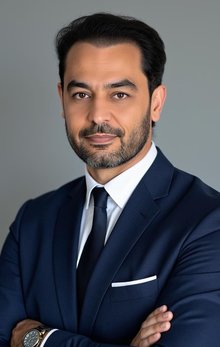
This focus on human-led value is embodied by leaders like Ahmed Raafat Associate Director - Supply Chain at A.R.M Holding.
With over 20 years of experience, Ahmed manages strategic sourcing, sustainable procurement and value-driven supplier partnerships.
His work focuses on embedding ethics, sustainability and innovation into procurement excellence. His leadership has delivered transformative initiatives including digital procurement adoption, Chartered Institute of Procurement & Supply (CIPS) Ethics Kitemark certification and resilience-driven supply chain frameworks.
Ahmed’s vision is to position procurement and supply chain as a catalyst for competitive advantage, ensuring projects not only meet timelines and budgets, but also create lasting impact for stakeholders and communities.
His leadership is defined by building high-performing teams, fostering strategic supplier partnerships and embedding resilience and ethics across the value chain.
This approach combines technical expertise with a clear vision of procurement as a strategic enabler of sustainable business growth. Those interested in learning more from Ahmed can see him on a panel at Procurement & Supply Chain LIVE: The Middle East Summit, which is co-located with Sustainability LIVE: The Middle East Summit,

Sustainability LIVE: The Middle East Summit
With a packed agenda and stand-out speakers, Sustainability LIVE: The Middle East Summit stands out for its breadth of coverage – CSOs, CSCOs, CPOs and alike will all take something valuable away with them.
Whether you are refining supplier networks, developing digital tools or embedding ESG priorities, the event offers direct, practical guidance.
Registration is open through the event agenda page, where attendees can also customise their experience. Plus, there’s no travel needed – just insight streamed straight to your screen.
Sustainability LIVE: The Middle East Summit
Dates: 3–4 February 2026
Format: Virtual
Location: Online
Register for free: https://next.brella.io/join/SPSCDUBAI
Company portals

Executives
Ahmed Raafat
Head of Procurement and Supply Chain