Renewables & Energy Access: Enbridge’s Sustainability Report
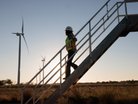
With 16,000 employees across North America and Europe, Enbridge’s operations focus on liquid and gas fuel pipelines, with a growing renewable energy portfolio.
It has released its 2025 Sustainability Report, which marks 25 years of sustainability reporting at the company.
Enbridge aims to deliver energy to customers around the world and advance solutions for a lower emissions future.

A focus on renewable energy
Throughout its operations and beyond, Enbridge focuses on embedding sustainability into its strategy.
This involves stakeholder engagement, transparency, sustainable business goals and Board governance.
The company views natural gas as a key part of the energy transition, as it provides lower emissions than coal, offering a suitable alternative for energy-intensive industrial processes such as mining, steel and cement manufacturing.
It is also an affordable source of energy, as well as being abundant in North America.
Enbridge is investing in renewable energy and lower-carbon technologies in addition to its traditional sources of energy.
In 2025, its renewable energy projects had the capacity to generate 7,237 MW of renewable energy, with the majority of this energy being sold under long-term power purchase agreements.
“At Enbridge, we continue to deliver the energy that fuels quality of life today while investing in the energy system of the future,” say Gregory Ebel, President and CEO and Steven Williams, Chair of the Board at Enbridge.
“In 2025, we advanced this commitment through strong business performance and by further integrating sustainability across our strategy, operations and governance in a rapidly evolving global energy landscape.
“This year also marks a milestone: 25 years of sustainability reporting at Enbridge, reflecting an approach that has evolved alongside our business and has become embedded in how we plan, invest, operate and govern decision-making. That foundation supports how we deliver the energy people count on every day, while strengthening the resilience of our systems for the future.”
Emissions reductions
Enbridge set greenhouse gas emissions reduction targets in 2020, making it North America’s largest energy infrastructure company with a goal of operating at net zero for Scope 1 and 2 by 2050.
It is committed to reducing the intensity of its greenhouse gas emissions from its operations by 35% by 2030 from a 2018 baseline.
It achieved this milestone in 2023 and has maintained its progress in 2024 and 2025.
To meet its 2050 target, Enbridge is exploring the use of carbon capture, carbon removal and other offset solutions to address its residual emissions.
Its decarbonisation process will involve replacing steel pipes and reducing venting before repairs in order to mitigate methane emissions across its natural gas value chain.
Sustainability leaders won’t want to miss Sustainability LIVE: The Leadership Summit at London Climate Action Week, taking place at Code Node on 25 June 2026.
Register now for this exclusive invite-only event.
Increasing energy access
With a growing global demand for energy, Enbridge is focusing on delivering reliable energy access to its customers.
Through its Enbridge Gas utilities, it supports energy and infrastructure investments by providing more than 7.1 million customers with natural gas.
It is investing in energy storage to keep up with demand and increase reliability during peak seasons and after unexpected weather events.
Enbridge uses robotic tools and drones to examine distribution pipelines and assess them for damage and corrosion.
In 2025, the company inspected more than 38km of pipelines with its in-line inspection (ILI) practices.
Pete Sheffield, Chief Sustainability Officer at Enbridge, says: “For the past 25 years, Enbridge has consistently provided updates to our stakeholders on operational and personal safety, efforts to mitigate and avoid environmental impacts, support for our people and communities and overall corporate governance.
“This year’s report reflects both our continued progress and the work that remains.”
Company portals
Enbridge

Executives
Gregory Ebel
Chief Executive Officer

Pete Sheffield
Chief Sustainability Officer