
RICS & Exergio: Why Green Building Demand is Falling
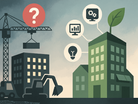
The momentum behind sustainable construction appears to be faltering, despite the urgent need to address the built environment's substantial carbon footprint.
According to the Royal Institution of Chartered Surveyors (RICS), demand for green buildings has declined significantly across most global markets, raising questions about whether the industry can meet its climate commitments.
The private sector's waning interest in sustainable real estate presents a troubling paradox.
While pressure mounts to decarbonise buildings, which account for nearly 40% of global carbon emissions, investment appetite has diminished markedly.
RICS's 2025 Sustainability Report reveals that global demand for sustainable real estate has dropped from 41% to 30%, with the Americas experiencing the most dramatic decline, plummeting from nearly 50% in 2021 to just 11 in 2025.
High upfront costs and uncertain financial returns remain the primary barriers preventing greater investment in energy efficient infrastructure.
The certification and performance gap
A significant concern for sustainability professionals is the widening chasm between investor priorities and occupant needs regarding energy performance.
While 86% of investors prioritise green building certification, RICS finds that 88% of residents identify energy efficiency as their top concern.
This misalignment would matter less if certifications consistently reflected a building's actual energy performance.
"Occupiers care about how a building works; investors care about how it's labelled," says Donatas Karčiauskas, CEO of Exergio.
"Until performance and certification point in the same direction, we'll keep building assets that look sustainable on paper but don't deliver it in practice."
This disconnect suggests a fundamental misalignment between what buildings claim to achieve and their real-world environmental impact.
For Donatas, this gap threatens to undermine confidence in sustainable construction altogether.
"Investors aren't against building sustainably – they just need proof it pays back," he explains.
"If a project requires expensive materials, equipment and certifications but the real-world performance doesn't translate into measurable savings, why would anyone scale it?"
His company develops AI tools that promote energy efficiency in real estate, reporting energy reductions of up to 30% across its commercial building portfolio, translating to savings exceeding US$1m annually.
However, the RICS data shows that from 35% to 46% of respondents cite uncertain return on investment or insufficient data on operational benefits as key barriers to acquiring green buildings.
All sustainability, net zero and sustainable supply chain leaders should attend:
- Sustainability LIVE: The Net Zero Summit - QEII Centre, London, March 4-5
- Sustainability LIVE: The US Summit - Navy Pier, Chicago, April 21-22
Co-located with Procurement & Supply Chain LIVE, these events brings together CSOs, ESG leaders and senior decision-makers at a moment when sustainability, supply chains and commercial performance are increasingly interconnected.
Tickets can be booked online today for The Net Zero Summit and The US Summit. Group discounts available.
Measuring carbon in construction
The report exposes a critical weakness in how the construction industry tracks its environmental impact.
Approximately 46% of construction professionals admit they do not measure carbon emissions on their projects at all, a figure that has increased over the past year.
Meanwhile, just 16% say they measure carbon in ways that influence their choice of materials and components.
"You can't improve what you don't measure, and you can't measure what you don't have the skills to assess," Donatas says.
"Right now, most carbon decisions are built on assumptions instead of real evidence."
This knowledge deficit pervades the sector. Only 17% of RICS respondents believe the industry possesses adequate sustainability expertise, while just 10% report familiarity with whole-life carbon assessment methods.

Regional variations and future solutions
While global demand for sustainable real estate has cooled, the Middle East and Africa shows growth, with a Sustainable Building Index reading of 52 compared to the global average of 30.
Europe, previously the strongest market, has seen its index fall to 39 in 2025.
The shift in the Americas appears linked to changing political priorities, though weak occupier cycles across commercial property markets have also contributed.
Nicolas Maclean, acting president of RICS, sees return on investment as one component of a larger challenge.
"In addition to high upfront costs and uncertainty around long-term returns, lack of knowledge and awareness about green buildings has emerged as a significant obstacle impeding investment in sustainable assets," he says.
"This raises the question of whether the full climate, environmental and social impacts of sustainable assets are consistently understood across regions."
Industry experts argue that AI could offer a viable path to closing the performance gap at scale.
"AI closes the gap the industry can't close on its own," explains Donatas.
"It proves ROI with real performance data, aligns what occupiers want with what investors pay for, and automates optimisation that today requires scarce expertise."
The technology can gather performance data automatically, interpret it without specialised training and adjust building systems continuously, addressing both the measurement problem and the skills shortage simultaneously.
Without such intervention, even renovated or newly certified buildings could continue missing both climate targets and the financial performance that would justify further investment in sustainable real estate.
Company portals


Executives

Donatas Karčiauskas
CEO
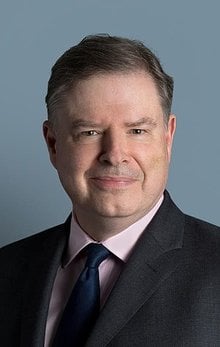
Nicolas Maclean
Acting President