Sandvik: Why We Can't Meet Climate Goals Without Mining
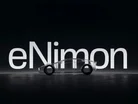
Sandvik has introduced the world’s first electric car constructed entirely without metals or minerals, a concept designed to provoke reflection rather than innovation.
The transparent, immobile vehicle - named eNimon, or the ‘no mine car’ - serves as a powerful reminder of the pivotal role mining plays in a sustainable future, symbolising what transportation would look like in a world without resource extraction.
Currently, more than 90% of electric vehicle components are sourced from mined materials - a fact that underscores how deeply mining underpins not only mobility, but also renewable energy infrastructure such as wind turbines and solar panels.
Sandvik developed eNimon to challenge perceptions and highlight the stakes if the world fails to advance sustainable mining practices.
“Sustainable mining is the backbone of the green transition,” explains Mats Eriksson, President at Business Area Mining at Sandvik.
“Without it, we can’t meet climate goals.”
Meeting the surging demand for critical minerals
The demand for minerals is intensifying.
Electric vehicles require nearly six times more minerals than internal combustion cars, while wind farms need about nine times more than gas plants.
Achieving global net zero by 2050 is projected to require up to five times more lithium, nickel and cobalt than today.
According to the International Energy Agency, global demand for critical minerals will triple by 2030 and quadruple by 2040. More than three billion tonnes of minerals and metals will be necessary to scale up wind, solar and energy storage systems globally.

"There wouldn’t be a green transition without mining," adds Mats. "We want to electrify the world because it makes the world more sustainable."
Mining goes digital
Modern mining operations are undergoing rapid transformation. Underground sites are increasingly invisible, autonomous, electrified and digitised. Self-optimising mines use real-time data collection to enhance productivity and decrease energy use per tonne of extracted ore. Automation features prominently, with battery-electric loaders, trucks and drills now managed by advanced software, significantly reducing the need for frontline personnel.
Compared to ten years ago, today’s mining technology provides operators with system-wide, live views that enable fine-tuning across the mining cycle - from blasting and haulage to ventilation and maintenance. The result is a boost in productivity, streamlined operations and a reduced environmental impact.
Safety has also evolved: autonomous fleets operate in harsher conditions without putting workers at risk, thanks to new collision-avoidance systems, remote control and continuous condition monitoring.
These innovations are not about indiscriminate expansion, but about intelligent mining that supplies the metals essential for decarbonisation.
Addressing the skills gap
Despite soaring demand for critical minerals, interest in mining studies is waning, with many young people hesitant to enter the field.
Global research commissioned by Sandvik reveals that only half of engineering students view mining positively, yet more than 90% would consider a career if they understood its impact on the green transition.
The mining industry faces a clear challenge to demonstrate genuine sustainability credentials - from electrified fleets and recycled water, to transparent reporting and community engagement - and to showcase that today’s mines are cutting-edge hubs for data science, automation and environmental stewardship.
Currently, the eNimon car is on display at the National Museum of Science and Technology in Stockholm, Sweden, inviting visitors to contemplate the future of sustainable mobility.