
Scania's Flexible Approach to Sustainable Transport
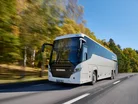
Long-distance bus and coach operators are navigating a period of major political and technological transformation.
As regulations on carbon emissions become more stringent and sustainability laws vary between countries and cities, the pressure to adapt intensifies. In this context, transport companies require solutions that not only meet today's rules but also anticipate future environmental targets.
Scania has responded by introducing two new powertrain options designed to provide operators with a flexible and strategic path forward.
The launch consists of a next-generation internal combustion engine (ICE) known as the Scania Super and a plug-in hybrid electric vehicle (PHEV).
Both are available on the same vehicle platform allowing operators to select a powertrain that aligns with their specific routes, available infrastructure and emissions goals. The approach aims to strike a balance between reducing environmental impact and maintaining cost-efficiency and operational reliability.
"Our new combustion and plug-in hybrid powertrains are shining examples of Scania’s twin commitment to sustainability and profitability for bus and coach customers," says Carl-Johan Lööf, Head of Product Management for People Transport Solutions at Scania.
Reducing emissions with advanced combustion
For many long-distance routes globally a combustion-powered coach is often the most practical option due to journey length and the availability of refuelling infrastructure.
The Scania Super powertrain addresses this reality with an upgraded 13-litre engine that offers notable efficiency gains.
According to Scania, it delivers fuel savings of up to 8% compared to its previous ICE powertrain which results in a corresponding reduction in CO₂ emissions. These improvements are achieved through the new engine operating with an updated Scania Opticruise gearbox, a smart automated transmission system that optimises gear shifts for fuel efficiency.
The powertrain is already compatible with the upcoming Euro 7 emissions standard designed to lower harmful tailpipe emissions like nitrogen oxides (NOx). A new aftertreatment system facilitates these lower emissions without compromising engine performance.

Durability is also a key feature as the engine is built to cover up to 2,000,000 kilometres. This extended lifespan contributes to a lower total cost of ownership and promotes sustainability through reduced material usage over the vehicle's life.
Harnessing hybrid power for urban access
For operators needing to access low and zero-emission zones, the PHEV version provides a solution that does not compromise operational range.
It integrates an e-machine with a six-speed powershift gearbox and can operate in four different drive modes: electric, hybrid, charge sustain and forced charging. This gives operators the flexibility to optimise energy use. When fully charged the PHEV has an electric-only range of up to 80 kilometres which is generally sufficient to travel through most zero-emission urban areas without using the diesel engine.
The PHEV retains a conventional engine meaning long-distance journeys that exceed the electric range can be completed without disruption.
Scania states that combining electric and hybrid driving in typical coach traffic could lower fuel consumption and CO₂ emissions by up to 40% depending on the route. This transition can be automated using Scania Zone a geofencing tool that switches the vehicle from hybrid to electric mode upon entering predefined areas ensuring seamless compliance with local air quality regulations.
A flexible strategy for sustainable transport
Scania’s strategy emphasises flexibility over a uniform approach acknowledging that different operators face specific challenges.
The dual-powertrain launch allows fleet managers to make informed decisions based on their specific regulatory environments route profiles and infrastructure. Whether the priority is a high-mileage diesel coach with a long service life or a plug-in hybrid capable of navigating emissions-restricted zones, Scania aims to provide tailored solutions.
This approach allows operators to invest in sustainability in a way that aligns with their business needs.
Carl-Johan explains: "With these new powertrains, we will be able to provide long-distance bus and coach operators with incredibly competitive solutions, regardless of their specific needs or which particular challenges they face, meeting both their current and future business needs."
By offering both highly efficient combustion and plug-in hybrid options on a single platform, Scania is providing the tools for the long-distance transport sector to continue its journey towards a more sustainable future.
