
How Schneider Electric Brings Energy Management to the NFL
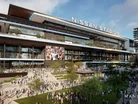
The Tennessee Titans may be working through a challenging period on the pitch, but the Nashville-based franchise is preparing to unveil a stadium that could set new benchmarks for technological sophistication in professional sports venues.
The organisation has spent the past two years rebuilding across multiple fronts, implementing changes to its playing roster, coaching structure and infrastructure.
At the centre of this transformation is a new Nissan Stadium, positioned along the Cumberland River in central Nashville, where construction commenced in February 2024.
The development carries an estimated price tag of £1.7bn (US$2.1bn), positioning it amongst the most costly sporting facilities ever constructed.
However, the investment extends beyond architectural design and seating capacity.
In March 2025, the Titans confirmed that Schneider Electric would serve as the official energy management partner for the project, with the stated ambition of creating one of the world's most technologically advanced and environmentally conscious sporting arenas.
As of March 2025, the project team has shared insights into the progress being made.
Infrastructure taking shape
The stadium's power resilience will depend on four electrical substation vaults when the Titans take occupancy in spring 2027.
These vaults are distributed across the structure, with one located at field level in each quadrant of the building.
According to Kellen DeCoursey, Project Executive on the Nissan Stadium development, each vault can accommodate approximately five megawatts of capacity.
In recently released footage from the construction site, Kellen outlined the role Schneider Electric's equipment will play in the venue's operations.
"Thanks to these switch gears and our transfer switches provided by Schneider Electric, the stadium is able to deliver uninterrupted power supply to the building," Kellen explains whilst standing in one of the substations.
The system is designed so that if the primary power source fails, automatic transfer switches would engage three generators per quadrant to ensure continuity.
This backup arrangement reflects the diverse programming the stadium is expected to accommodate, ranging from NFL matches and Tennessee State University fixtures to concerts and large-scale events.
Kellen suggested that early engagement with Schneider Electric during the design phase proved crucial for maintaining the project timeline, particularly around equipment procurement.
"Working with Schneider Electric as a partner on the project, we were able to coordinate early on in the design phase to ensure that we had the right equipment in order to make sure that we avoided heavy lead times that hinder projects of this size," he notes.
The observation highlights a broader challenge facing major construction projects, where delays in obtaining electrical equipment have affected numerous infrastructure developments in recent years.

Partnership scope and objectives
When Schneider Electric was announced as the energy management partner in 2025, the French company committed to a five-year engagement beginning with the venue's launch.
The partnership encompasses electrical power distribution and control systems, IT physical infrastructure, clean uninterruptible backup power and an integrated building management system, extending beyond the substation framework.
At the time of the announcement, specific targets were outlined: a 20% reduction in energy consumption and a 30% decrease in operational downtime.
If realised, these figures could represent significant progress for a facility of this magnitude.
The franchise projects that the approximately 2.1-million-square-foot (195,096-square-metre) venue could generate over £27bn (US$33.7bn) in economic impact for Nashville over three decades.
Schneider Electric has highlighted that several technologies being installed in the stadium are manufactured in Tennessee, where the company maintains facilities in Franklin, Smyrna and Mt. Juliet, alongside a global research and development centre.
Michelle Hix, Vice President of Strategic Customers at Schneider Electric, framed the company's involvement in terms of visitor experience.
"It takes reliable, safe, energy efficient power to deliver outstanding fan experiences all season long," she says.
"Titan up!"
The stadium is scheduled for completion in February 2027, with the partnership agreement running for five years from the opening date.
Company portals



Executives

Kellen DeCoursey
Project Executive

Michelle Hix
Vice President of Strategic Customers