Schneider Electric & QMUL: Using Data Centres to Heat London
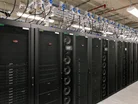
As the digital world accelerates, data centres have become the backbone of research, innovation and daily operations for institutions worldwide.
Yet, their growing energy demands and heat output pose significant sustainability challenges.
Schneider Electric and Queen Mary University of London (QMUL) have transformed these challenges into opportunities, setting a new benchmark for sustainable data centre operations through an innovative district heating initiative.
“The project at Queen Mary demonstrates how digital infrastructure can be a catalyst for net zero, allowing today’s organisations to benefit from the power of advanced computing,” says Mark Yeeles, Vice President, Secure Power division, Schneider Electric UK & Ireland.
“By combining innovative engineering with sustainable data centre solutions, the university has developed an enhanced infrastructure platform that will meet its research computing requirements, while supporting its sustainability strategy.”
Turning waste heat into campus-wide value
Queen Mary University of London, ranked among the world’s top 100 universities, is renowned for its commitment to world-leading research and sustainability. Its data centre supports critical research, including participation in the Grid for Particle Physics (GridPP) project, which analyses data from high-energy physics experiments like those at CERN’s Large Hadron Collider.
However, the university’s legacy data centre struggled with reliability, scalability and inefficient cooling, resulting in operational disruptions and excessive energy consumption.
Recognising both a challenge and an opportunity, QMUL embarked on a modernisation initiative. The solution: recover waste heat from the data centre and channel it into a campus-wide district heating network.
This system now provides heating and hot water for university buildings and student accommodation, directly reducing the campus’s Scope 1 CO₂ emissions and energy costs, while supporting the university’s sustainability goals.
“The support we've had from APT and Schneider Electric has been unparalleled,” shares Professor Jonathan Hays, Queen Mary University of London.
“Both companies came together to help us develop an exciting and innovative project which would enable us to provision for the future. The biggest impact is that we were able to deliver on what we promised while improving our sustainability.
“The new data centre is more reliable and efficient than ever and through the heat recovery, we have significantly reduced our spending on heating and hot water, while gaining enhanced reputational benefits from taking a lead on sustainability within our data centre operations.”
Collaborative innovation for a greener future
Schneider Electric, a global leader in energy management and automation, partnered with its EcoXpert Partner, Advanced Power Technology (APT), to deliver this transformative project.
The collaboration focused on integrating Schneider Electric’s EcoStruxure Row Data Centre solution – an adaptable system encompassing racks, power, cooling and management.
The deployment included APC NetShelter Racks, APC NetBotz environmental monitoring, InRow cooling and EcoStruxure Data Centre Expert software, providing real-time monitoring and complete operational visibility.
This integration not only improved energy efficiency and reliability but also enabled the heat recovery system that now powers the district heating network.
“Schneider Electric’s EcoStruxure Data Centre solutions were essential to help Queen Mary bring together its power, cooling, racks and management systems and support the deployment of its high-density IT equipment needed for its research,” said John Andrew, Technical Sales Manager, APT.
“This approach also created a platform to support its sustainability objectives via heat reuse, while enabling the University to act proactively and preventatively to intercept and remediate potential future issues.”

Driving digital infrastructure for net zero
Data centres are often criticised for their substantial energy use and carbon footprint. However, projects like QMUL’s demonstrate that with innovative engineering and strategic partnerships, data centres can become catalysts for sustainability. By capturing and reusing waste heat, institutions can reduce emissions, lower energy costs and contribute to broader environmental goals.
Schneider Electric’s mission is to empower organisations to maximise energy and resource efficiency, bridging progress and sustainability. With a global ecosystem of 150,000 colleagues and more than a million partners, Schneider Electric delivers integrated, AI-enabled Industrial IoT solutions across electrification, automation and digitisation.
The Queen Mary project exemplifies how digital infrastructure, when designed with sustainability in mind, can deliver both operational excellence and significant environmental benefits. As demand for data processing continues to grow, such initiatives will be critical in shaping a greener, more sustainable digital future.
Explore the latest edition of Sustainability Magazine and be part of the conversation at our global conference series, Sustainability LIVE.
Discover all our upcoming events and secure your tickets today.
Sustainability Magazine is a BizClik brand