
Schneider's Lighthouses Showcasing Industrial Digitalisation
Improving industrial sustainability can bring a number of benefits. In addition to greater energy efficiency and reduced carbon emissions, it can also make production quicker and more robust.
A key tool for improving industrial sustainability is the adoption of digital technologies such as artificial intelligence (AI) and Internet of Things (IoT) applications – otherwise known as the Fourth Industrial Revolution (4IR).
But this can be complex and costly to implement. To support uptake, the World Economic Forum (WEF) and McKinsey & Company established the Global Lighthouse Network (GLN), which recognises manufacturing sites that lead in 4IR adoption.
These facilities serve as global benchmarks for using AI and advanced technologies to upgrade operations.

Lighthouses are production sites and value chains that successfully scale advanced technologies—such as AI, industrial IoT, and big data—to achieve step-change
This month, two Schneider Electric projects have been added to the GLN, taking the company’s total number of sites on the network to 11 and the total GLN to 238 sites.
“I’m very proud of the teams who made this real - on the shop floor, in engineering, and across our ecosystem,” says Mourad Tamoud, Chief Supply Chain Officer at Schneider Electric.
“Because in the end, transformation is about building capabilities the world will soon expect as standard. And this is exactly what these two teams have built.”
El Paso, Texas
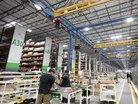
Schneider’s newest site on the list is its El Paso, Texas, manufacturing facility, which produces low-voltage and medium-voltage electrical products for use in distributing electricity from the utility grid to industrial, commercial, and residential settings.
Growth in data centre demand significantly increased complexity across the site's engineer-to-order value chain, creating production, testing and logistics bottlenecks.
Schneider leveraged data engineering, integrated logistics, industrial IoT and advanced AI solutions to help improve the site’s output.
“El Paso stands out as the first engineer-to-order (ETO) Lighthouse, redefining complexity into performance - improving on-time delivery from 61% to 97%, reducing lead times by up to 35%, and eliminating US$43m in backorders,” says Schneider CEO Olivier Blum.
Beijing, China
Schneider’s second-newest site on the GLN is found in Beijing.
With 30% business growth, increased in-sourcing and stricter sustainability requirements, Schneider faced the challenge of reducing emissions across its value chain while supporting continued expansion.
It deployed products without using SF₆ gas, supported supplier decarbonisation and strengthened energy optimisation and circularity initiatives. As a result, the site achieved “zero Scope 2 emissions, alongside a 65% reduction in Scope 1, a 43% cut in Scope 3, and a 36% improvement in energy efficiency”, Olivier says.
“I’m incredibly proud of these achievements, and even more of the people behind them. Congratulations to all involved in driving impact where operational excellence and sustainability go hand in hand.”
Schneider's Lighthouses
Schneider's remaining nine manufacturing sites that are already included on the GLN stretch from Shanghai, Wuhan and Wuxi in China, to Hyderabad in India and Monterrey in Mexico.
Wuhan, China
Added to the GLN in January 2026. As Schneider increased automation and expanded its product portfolio at the site, it created challenges among the workforce, resulting in a high turnover of technicians.
Schneider established digital apprenticeships co-designed with schools, AI upskilling and a genAI-augmented maintenance workforce, which cut onboarding to 15 days, upskilled 56% of employees and reduced technician turnover by 42% over five years.
Evreux, France
Added to the GLN in September 2025. Schneider Electric transformed its Evreux site into a circular distribution centre. This included a digital customer platform for ordering and take-back of over 3,000 products, as well as circular solutions in packaging, transportation and energy.
These efforts reduced single-use plastic by 40% and energy consumption by 18%, according to Schneider.
Wuxi, China
Added to the GLN in January 2025. The electronics manufacturing centre in Wuxi reached net zero Scope 1 and 2 emissions in 2022 with sustainability initiatives including AI-powered eco-design, closed-loop carbon-dioxide tracking and machine learning models.
This resulted in a 65% reduction in Scope 3 emissions and a 15% cut in water use.
Monterrey, Mexico
Added to the GLN in October 2024. Schneider Electric’s Monterrey facility leveraged Machine Learning-driven forecasting and autonomous robots.
This led to a 20% reduction in defects and a 30% reduction in water consumption.
Shanghai, China
Added to the GLN in October 2024. With growing demand and more products on offer, Schneider boosted automation at its Shanghai facility by 20% and integrated advanced technologies like machine learning and gen AI-driven maintenance.
This resulted in a 63% improvement in speed-to-market, a 67% reduction in lead time and an 82% increase in productivity.
Hyderabad, India
Added to the GLN in December 2023. Schneider’s Hyderabad site aims to be zero-carbon in Scopes 1 and 2 by 2030. To support this aim, Schneider implemented CO₂ tracking for suppliers, backed by cloud analytics, IoT and AI monitoring.
This has led to a 59% reduction in energy consumption, a 61% decrease in CO₂ emissions, a 57% cut in water consumption and a 64% reduction in waste.
Le Vaudreuil, France
Added to GLN in March 2022. The Le Vaudreuil site implemented industrial Internet of Things (IIoT) sensors to optimise energy management by 25%, reduce waste by 17% and cut CO₂ emissions by 25%.
The factory is equipped with a zero-reject water recycling station connected to cloud analytics and monitored by an AI model, resulting in a 64% reduction in water use.
Lexington, USA
Added to GLN in September 2021. Schneider’s Kentucky factory uses IoT with power meters and predictive analytics to optimise energy costs.
This led to a 26% energy reduction, a 30% net CO₂ reduction, a 20% water-use reduction, and a performance certification from the US Department of Energy.
Batam, Indonesia
Added to GLN in January 2020. The facility used Schneider Electric’s IoT-enabled, plug-and-play, open, interoperable architecture and platform, which provided real-time tracking of operational performance and preventive maintenance requirements.
This helped the plant reduce the time spent on maintenance and waste material.
Company portals

Executives

Mourad TAMOUD
Chief Supply Chain Officer
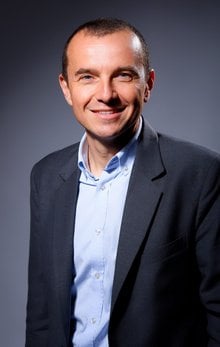
Olivier Blum
Chief Executive Officer